










7 Investing Mistakes Warren Buffett Warns About (And How to Avoid Them)
 Phil Town
 In This Article
- Why Avoiding Mistakes Beats Picking Winners
- Mistake One: Treating the Stock Market Like a Casino
- Mistake Two: Sitting on Your Hands When the Opportunity Shows Up
- Mistake Three: Buying Businesses You Don't Understand
- Mistake Four: Overpaying, Even for a Wonderful Business
- Mistake Five: Letting Your Emotions Drive
- Mistake Six: Using Leverage to Buy Stocks
- Mistake Seven: Doing Too Much
- The Four M's: Warren Buffett's Investing Rules in Practice
- Practice This With Live Coaches at the Virtual Investing Workshop
The Warren Buffett investing mistakes I see most often have nothing to do with picking the wrong stock. Buffett has spent decades watching everyday investors repeat the same handful of errors. They're mistakes of process, temperament, and price, and every one is avoidable once you know what to look for.
I've called these the seven deadly sins of investing for years, because that's what they feel like when you're on the wrong end of one. Cut them out of your game and you'll be avoiding what trips up most people, professionals included.

Why Avoiding Mistakes Beats Picking Winners
Most investors spend their energy hunting for the next great stock. That's the wrong game.
The investing mistakes to avoid in 2026 are the same ones that have been emptying accounts for generations. Most losses don't come from missing a winner, they come from stepping on something you could have seen.
Rule #1 is don't lose money. That isn't a slogan, it's the operating principle behind every decision I make. If you focus first on not losing, the winning has a way of taking care of itself.
Mistake One: Treating the Stock Market Like a Casino
My biggest complaint about modern investing is that people stopped buying businesses and started betting on ticker symbols. When you buy a share of stock, you own a piece of a real business with real people, real products, and real cash moving through the door. In a euphoric market, everybody forgets that and chases whatever's going up instead.
Buffett watched this exact movie during the dotcom bubble, and it repeated with GameStop and AMC a generation later. The stories change. The ending doesn't.
The antidote is remembering that Mr. Market is there to serve you, not instruct you. I go deeper on that idea here.
Mistake Two: Sitting on Your Hands When the Opportunity Shows Up
The Amazon Miss
Buffett has said his costliest mistakes weren't the bad investments he made. They were the good ones he didn't.
He saw Amazon early, he understood what it was doing, and he never pulled the trigger. Berkshire Hathaway missed one of the great investments of the century through inaction, not ignorance.
That's the sin of omission, and it's sneakier than any bad buy.
How Paralysis Disguises Itself as Patience
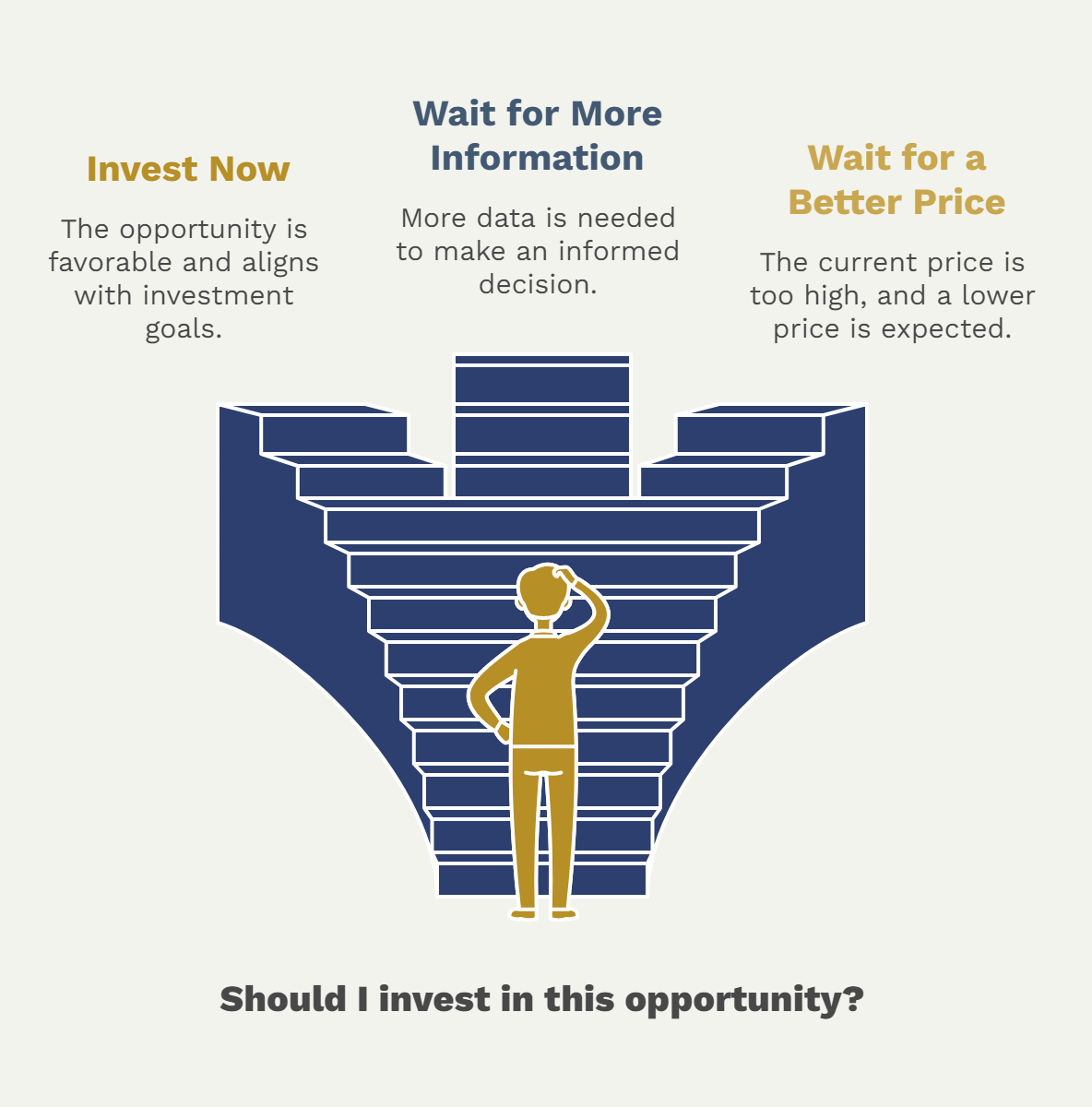
This one hides behind good intentions. I just want a little more information. I'll wait for a slightly better price.
Then the window closes. Patience is everything in this business, but there's a real difference between patience and paralysis, and most investors can't tell which one they're practicing until it's too late.
Shoulda, coulda. Very painful. Ask me how I know.
Why a Watchlist Takes the Decision Off the Table
At Rule #1, my team of portfolio managers and analysts keeps a running watchlist of wonderful businesses. Most of the time those businesses are too expensive for us to touch, and that's fine. The point is that the research is already done.
When one of them finally goes on sale, we take one last look together, and if it's green lights all around, we buy. We don't sit around sucking our thumb. A watchlist turns a stressful real-time decision into a prepared one.
Mistake Three: Buying Businesses You Don't Understand
Staying inside your circle of competence isn't about limiting yourself. It's about being honest about what you actually know, not what you only think you know. You need a handful of businesses you know cold, not an opinion on every company in the market.
Buffett avoided technology for decades, then made Apple one of Berkshire's largest holdings, but only once he understood it as a consumer products business with switching costs high enough that customers almost never leave.
The great investors know what they know, and more importantly, what they don't. If a business is too hard to understand, put it in Buffett's too-hard box and move on. There's no penalty for passing.
Mistake Four: Overpaying, Even for a Wonderful Business
Early in his career, Buffett bought cheap, beaten-down “cigar butt” stocks in the Ben Graham style. Then Charlie Munger changed his thinking for good: a wonderful company at a fair price beats a fair company at a wonderful price. But catch that word, fair. It doesn't mean any price will do.
Investors fall in love with a great business and decide the price doesn't matter. It always matters, in the dotcom bubble and in the AI bubble playing out right now. A wonderful business bought at a terrible price is still a terrible investment.
That's why I start with the Sticker Price, what the business is worth at full value, then wait to pay half of that. Run the numbers yourself with the margin of safety calculator, or read more about the viral finance mistakes I see investors make chasing price over value.
Mistake Five: Letting Your Emotions Drive
The market runs on greed and fear, taking turns amplifying each other. Prices rise, greed kicks in, and everybody's sure it'll go up forever. Then the cycle turns, fear takes the wheel, and everybody dumps at the bottom.
Most investors do this exactly backwards: buying expensive because everyone's buying, selling cheap because everyone's panicking. Being fearful when others are greedy is easy to say and brutally hard to do when your portfolio is down and every headline sounds like the end of the world. But the businesses you own haven't changed, only Mr. Market's mood has.
Buffett built Berkshire's cash position to a record $397 billion by early 2026 while the market kept setting new highs. Since handing the CEO role to Greg Abel, that cash has started going to work: a stake in Alphabet, the Taylor Morrison acquisition.
That's exactly the point. The discipline was never about sitting on cash forever. It was about waiting for the moment it was worth spending. Read more on what that cash pile taught us about staying rational while everyone else panics.
Mistake Six: Using Leverage to Buy Stocks
If you own a wonderful business free and clear and it drops fifty percent, you still have a choice: hold, wait for Mr. Market to come to his senses, or buy more at a better price. Borrow the money to buy it instead, and that choice disappears. A margin call forces you to sell at the worst possible price, with interest costs compounding against you the whole time.
Buffett put it simply: if you're smart, you don't need leverage, and if you're dumb, it'll ruin you. A decline only becomes a permanent loss when you're forced to sell. That's Rule #1 in practice. I go deeper on the other costly mistakes investors make with debt here.
Mistake Seven: Doing Too Much
Investing Is a No Called Strike Game
People picture great investors trading behind six screens all day. Buffett built the greatest record in the business by doing almost nothing.
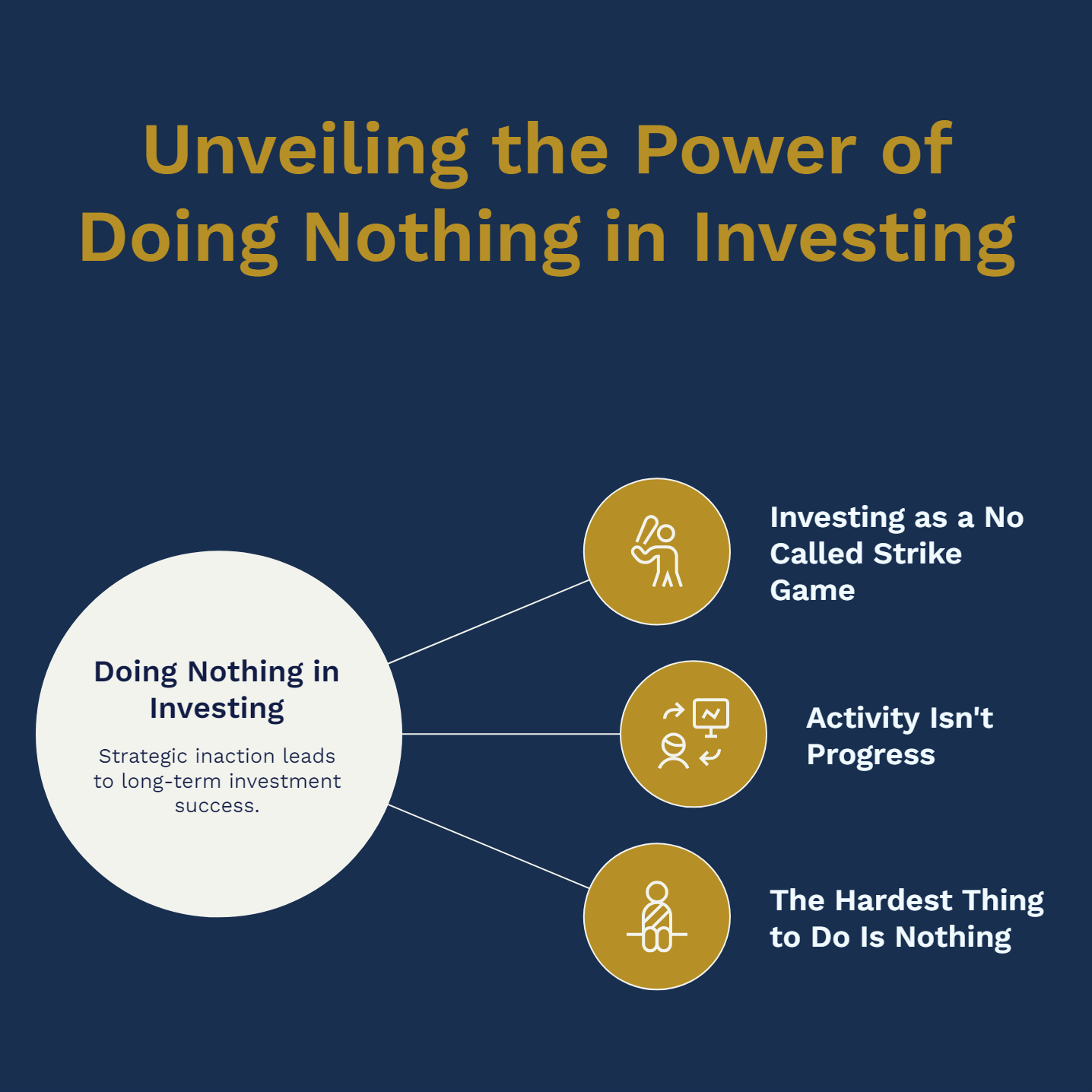
Think about it like baseball, except nobody's calling strikes. You can stand at the plate all day and let a thousand pitches go by and nobody rings you up. You wait for the fat pitch right in your sweet spot, and then you swing big.
Activity Isn't Progress
Most investors confuse activity with progress. Buying, selling, checking prices, tinkering with the portfolio, CNBC on in the background all day. It feels productive.
It isn't. Overtrading stocks costs you in commissions, in taxes, and in the steady risk of acting on a headline instead of on the business.
The Hardest Thing to Do Is Nothing
The real money gets made by finding wonderful businesses, buying them at an attractive price, and letting them compound for years. Decades, even.
The hardest thing to do in investing is nothing. Sitting still while the market lurches around and everybody you know is trading. It's also the most profitable thing you can do, provided you did the work up front.
The Four M's: Warren Buffett's Investing Rules in Practice
Meaning Keeps You Inside Your Circle
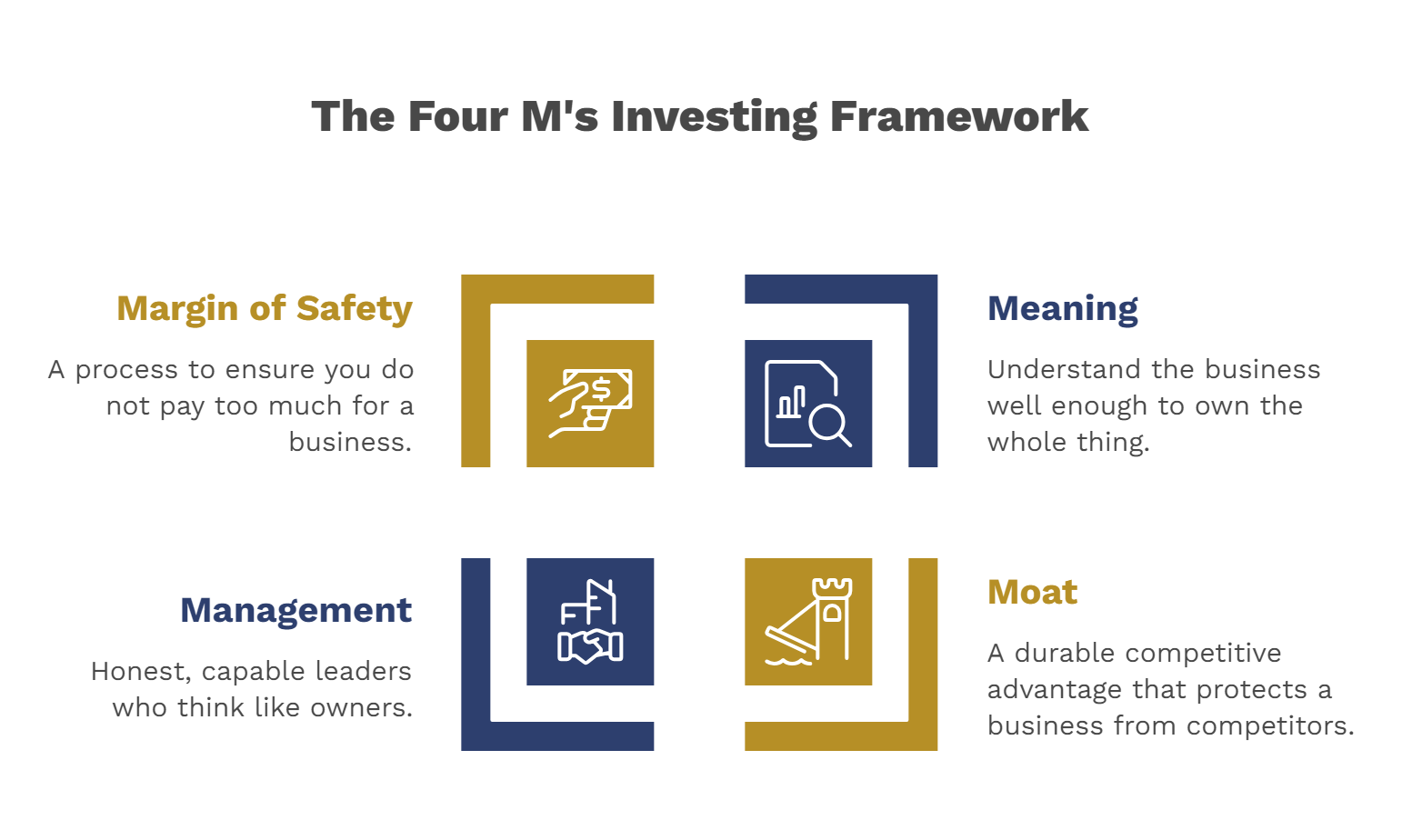
Meaning is the first M for a reason. Before anything else, you need to understand the business well enough to own the whole thing. That single filter takes care of the casino problem and keeps you from buying something you can't hold through a forty percent drop.
Moat and Management Tell You What's Worth Waiting For
A moat is the durable competitive advantage that protects a business from its competitors over time. Management tells you whether the people running it are honest, capable, and thinking like owners.
Together those two tell you which businesses belong on your watchlist. You can't wait for the fat pitch if you don't know which pitches are worth swinging at.
Margin of Safety Keeps You From Overpaying
The fourth M closes the loop. Once you've found a wonderful business you understand, with a real moat and management you trust, Margin of Safety is what stops you from paying too much for it.
You calculate the Sticker Price, you wait for half, and you buy. The Four M's turn seven separate mistakes into one repeatable process. Read the full Four M's framework here.
A collection of Warren Buffett investing quotes will show you how consistently he's said the same things for sixty years.
Practice This With Live Coaches at the Virtual Investing Workshop
Reading about these seven mistakes and avoiding them under real pressure are very different things. That gap is exactly what the Virtual Investing Workshop is built to close.
We don't just talk at you. You practice in real time with live Rule #1 coaches, working through an actual business, setting your own Sticker Price, and building a watchlist you researched yourself. More than 25,000 people from 56 countries have come through our workshops.
My goal has always been the same. I want to teach people how to take control of their finances so they don't have to hand their money to someone who'll get them a mediocre return at best.
Show up ready to learn and I'll make sure you know what you're doing.
Now go play.
Rule One Investing provides investment education and training only. We do not provide personalized investment advice, manage client assets, or guarantee investment returns. All content is for informational purposes. Consult a qualified financial professional before investing. Past performance does not guarantee future results. Individual results vary.

About Phil Town
Phil Town is an investment advisor, hedge fund manager, 3x NY Times Best-Selling Author, ex-Grand Canyon river guide, and former Lieutenant in the US Army Special Forces.
He and his wife, Melissa, share a passion for horses, polo, and eventing. Phil's goal is to help you learn how to invest and achieve financial independence.
Get Phil's Free Guide