











How to Protect Your Investments With Put and Call Options
 Phil Town
 In This Article
- Here are three reasons why you should listen to this episode:
- Resources
- Options Are Not What You Think
- The Foundation: Know What a Business Is Worth
- What Is a Put Option?
- What Is a Call Option?
- The Collar Strategy: Protection That Pays for Itself
- The Collar vs. a Stop Loss Order
- How to Learn Options Without Risking Real Money
- Discipline, Patience, and the Rule #1 Way
- Expert Advice & Powerful Quotes
- Danielle Town: Attorney, Author & Investing Advocate
- Protecting What You've Built: Options, Discipline, and the Path Forward
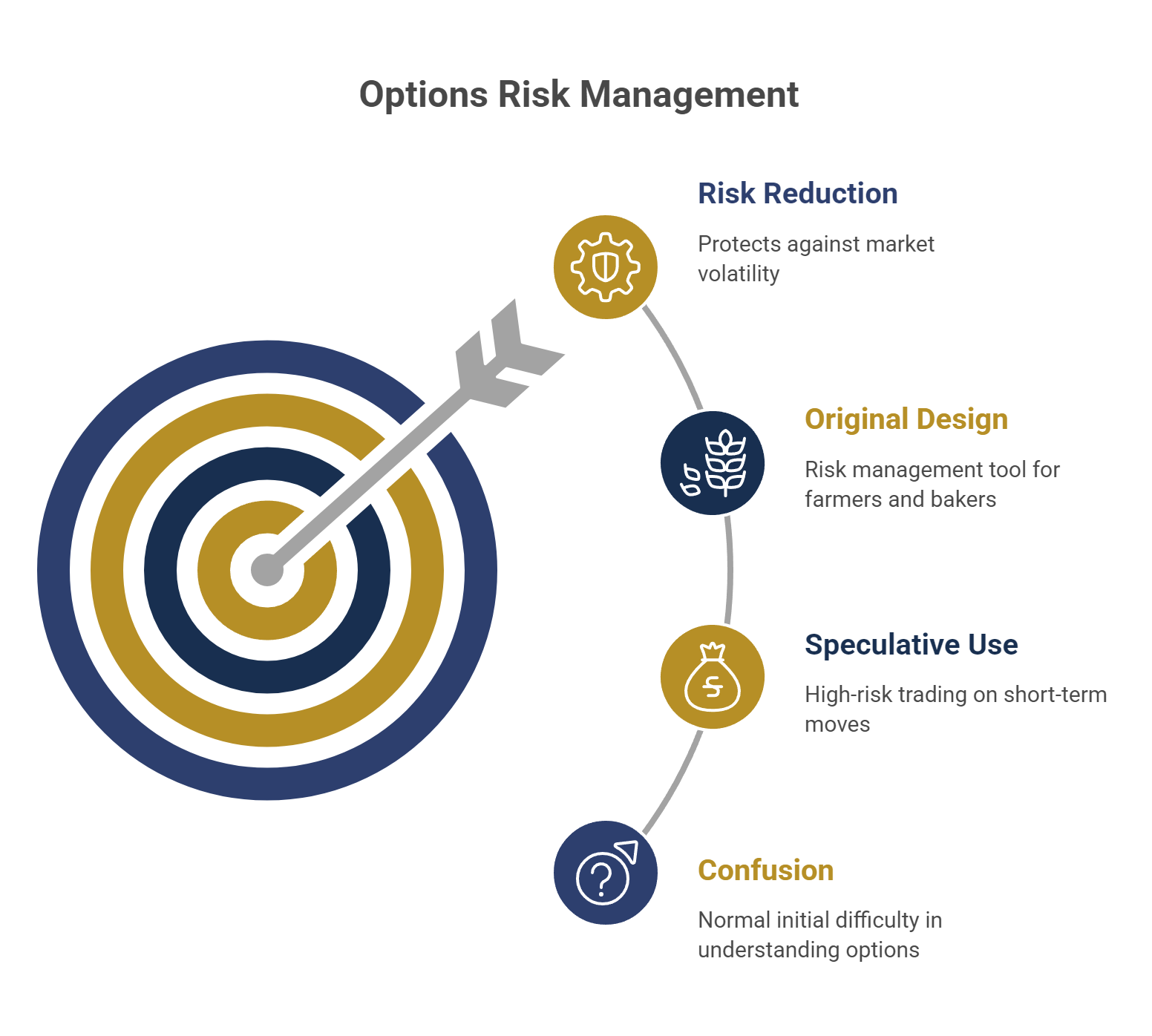
Most people hear the word "options" and think of risky trading, complex strategies, and Wall Street speculation. That reputation is understandable. But it tells only part of the story. Options were not invented to gamble with. They were invented to protect against loss.
In this episode of the InvestED Podcast, Danielle and I walk through how put options, call options, and the collar strategy can work as powerful risk management tools. I share a real example using a stock I actually own, explain how combining a put and a call creates a nearly free insurance policy on your position, and cover exactly where beginners should start before putting any real money at risk.
Understanding how options work can change the way you think about protecting your portfolio. When they are grounded in knowing what a business is truly worth, they stop being a gamble and start being a discipline. Tune in to discover how the Rule #1 approach to options can help you invest with more confidence.

Here are three reasons why you should listen to this episode:
Discover why options were originally built to reduce risk, not increase it, and how that single insight changes everything about how to use them.
Learn how the collar strategy works as a real-world insurance policy on a stock you already own, explained through a live example with actual numbers.
Understand why knowing your Sticker Price is the non-negotiable foundation for using any options strategy responsibly.
Resources
Rule #1's "InvestED" Podcast and Website: Website | Apple Podcast | YouTube
Visit Rule #1 for more investing resources: Website | Facebook | LinkedIn | X (Twitter) | Instagram
Danielle Town: Website | LinkedIn | Instagram | Facebook | YouTube | X (Twitter)
Options Are Not What You Think
When most investors hear the word "options," they picture Wall Street traders making leveraged bets on short-term price moves. That version of options exists, and it can cost you everything if you do not know what you are doing. But that is not what options were designed for, and it is not what I teach.
Where Options Actually Came From
Options were not invented on Wall Street. They came from farmers.
Picture a wheat farmer with seed in the ground and months to go before harvest. He has no idea what wheat will sell for by September. If prices drop, he could lose money on a crop he has already worked hard to grow. That uncertainty is a very real problem.
Now picture a baker who needs flour to run a profitable business. He knows exactly what price lets him make money. If he could lock in that price today, he would.
In June, the farmer and the baker find each other. They agree on a price for wheat to be delivered in September. The farmer locks in his revenue. The baker locks in his cost. Both of them are protected from a future they cannot predict.
That agreement is where options came from. They were built to manage risk, not to create it.
The Risk Is in How You Use Them
Danielle put it plainly when she said, "I have tried to memorize how they work, and it will not stay in my brain. They're so bloody confusing."
That reaction is completely normal, and most people feel exactly that way when they first encounter options. But confusion about how something works is not the same as the thing itself being dangerous.
If you decide to gamble with options, they become dangerous. That is true. But if you use them the way they were originally designed, as a tool for protection rather than speculation, they reduce your risk. The danger does not come from the options themselves. It comes from using them without doing your homework first.
The Foundation: Know What a Business Is Worth
Options make sense only when you already know what the business you own is actually worth. Without that knowledge, you are guessing. And guessing with options is exactly how people get hurt.
At Rule #1, we call that number the Sticker Price. It is our term for intrinsic value, the true worth of a business based on its growth, earnings, and long-term potential. Before I ever think about using an options strategy, I calculate the Sticker Price first. That number is the foundation of everything that follows.
Learn how to calculate your own Sticker Price and Margin of Safety before putting any options strategy into practice.
When Danielle and I were walking through a real position together, she asked:
"You're saying that's your sticker price, the intrinsic value of the company?"
That is exactly right. Knowing your Sticker Price gives you answers to the questions that matter most as an investor:
Is this business currently on sale and worth buying?
What price represents full value and signals it is time to exit?
How much margin of safety do I have at today's price?
What strike price makes sense when using options to protect my position?
Without those answers, options are just guesswork. With them, every decision has a rational foundation.
Knowing intrinsic value also shapes how I think about when to sell. The legendary investor Warren Buffett, in his early years, was disciplined about exiting a stock as it approached its true value. Depending on what the business is, once a business is fully priced, the rate of growth on your investment may begin to slow.
There may be another opportunity to move that capital to a better one that can grow from a discount back to full value again, and that is what keeps your returns strong over time. At Rule #1, we call that velocity of money.
The Sticker Price is not just a number for deciding when to buy. It also tells you what price you are comfortable walking away at. That clarity is what makes every options decision that follows a disciplined one.
What Is a Put Option?
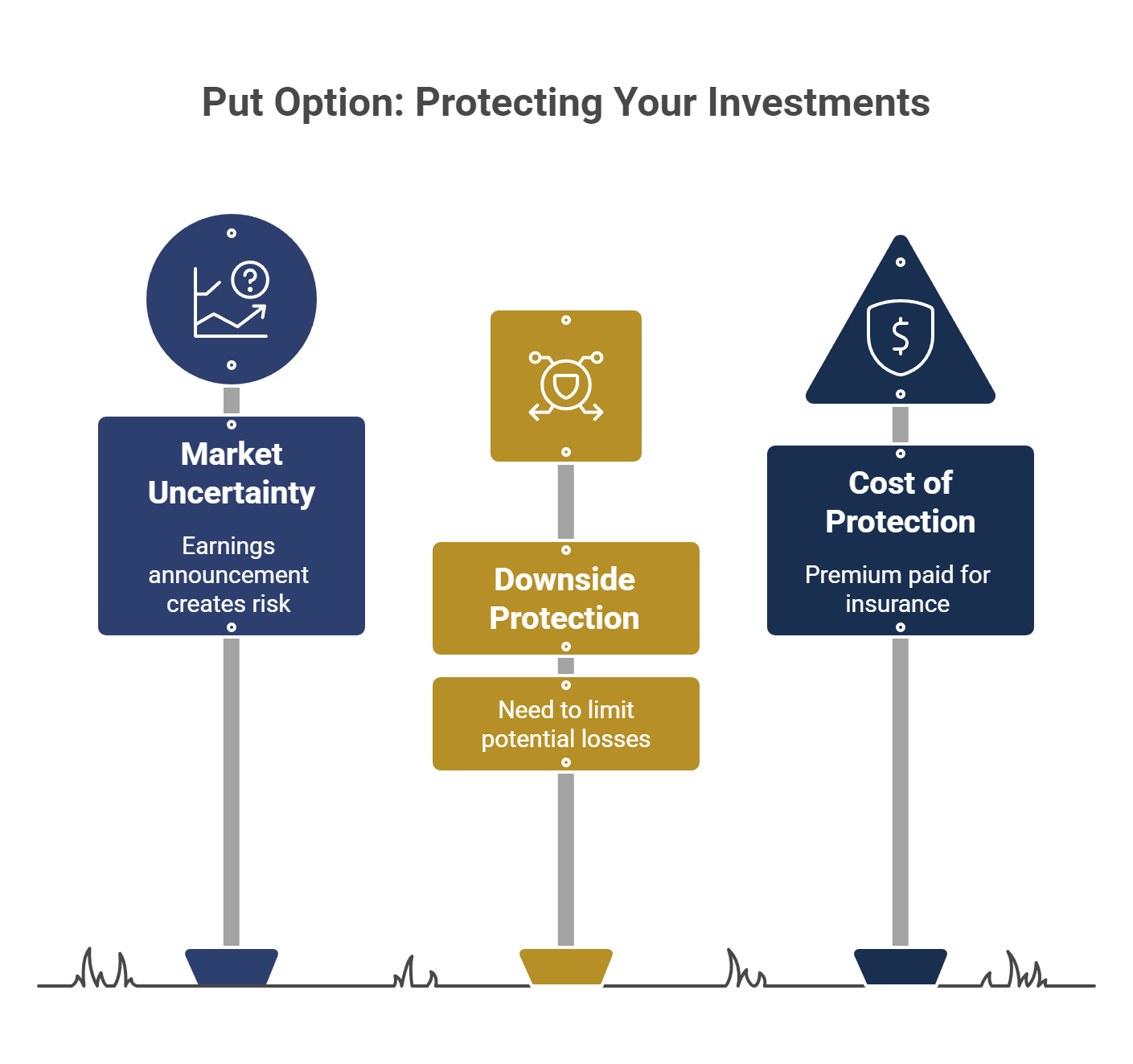
Rule #1 has one guiding principle: do not lose money. A put option is one of the most practical tools available for putting that principle into action.
A put option gives you the right to sell a stock you own at a specific price, within a specific time frame, no matter what the market does. It is a way to protect a position you already believe in while you wait for the business to reach its full value.
Think of it like insuring a house you believe in. You are not buying insurance because you think the house will burn down. You are buying it because protecting what you have built is the responsible thing to do.
A Real Example
These numbers are illustrative of the strategy, not current market data or typical outcomes.
I owned shares in Chipotle at around $464. I had done my research, I knew the business, and I had a clear sense of what it was worth. But a major earnings announcement was coming that could send the stock sharply in either direction. I did not want to sell my position. I also did not want to watch the price fall to $400 without any protection in place.
So I bought a put option at a strike price of $460 with one year to expiration:
If Chipotle fell to $400, I still had the right to sell at $460, limiting my downside.
If the stock continued rising toward my Sticker Price, I let the put expire unused and kept the gains.
The cost of that protection was approximately $50 per share.
If the stock went up, I paid $50 for protection I did not end up needing. If it fell hard, that $50 preserved the value I had worked to build. Either way, Rule #1 stayed intact.
What Is a Call Option?
A call option gives someone else the right to buy your stock at a specific price, within a specific time frame. When you sell a call, you receive a premium in exchange for that agreement.
Here is the important distinction from a Rule #1 perspective. On Wall Street, selling call options is often marketed as an income strategy, a way to squeeze extra returns out of a stock you already own. That framing can get people into trouble. You should only sell a call at a price you are genuinely happy to sell at. And that price should be grounded in your Sticker Price, not a number you pick at random.
Selling a Call at Your Sticker Price
These numbers are illustrative of the strategy, not current market data or typical outcomes.
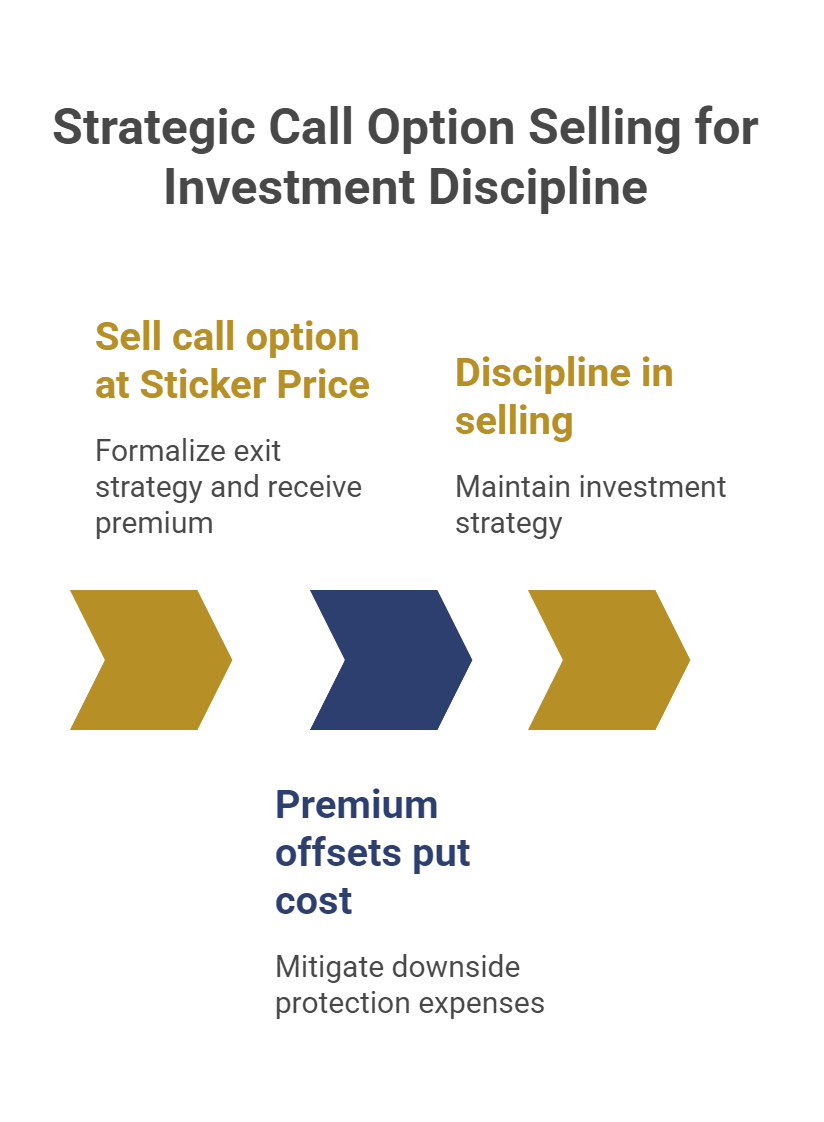
In the Chipotle example, I sold a call option at $500, which was approximately my Sticker Price for the business. The premium I received was approximately $49.20 per share.
Here is why this matters. My Rule #1 exit plan already called for selling Chipotle near intrinsic value. Selling a call at $500 was not giving anything up. It was formalizing a decision I had already made, and getting paid to make it.
My Sticker Price said $500 was approximately full value for the business.
Rule #1 discipline says you exit when a stock reaches full value and deploy capital elsewhere.
Selling the call at $500 locked in that exit and generated approximately $49.20 per share in premium.
That $49.20 nearly offset the full $50 cost of the put I had already bought to protect my downside.
When your exit price is grounded in Sticker Price, selling a call is not a compromise. It is discipline.
The Collar Strategy: Protection That Pays for Itself
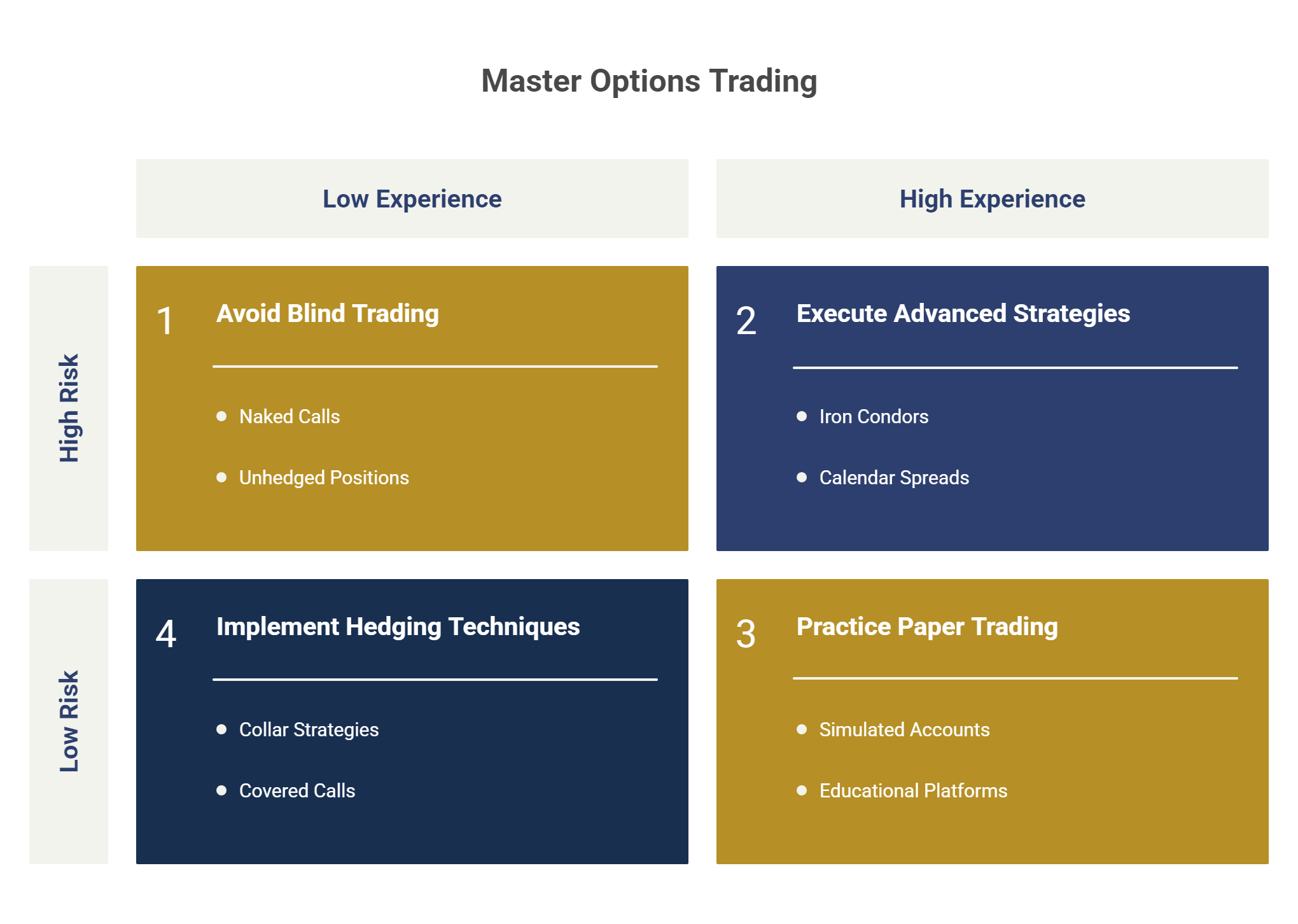
When you combine a put option and a call option on a stock you already own, the result is a strategy called a collar. The name fits. You are collaring your position between two prices, a floor below which you are protected and a ceiling above which you have agreed to sell.
Here is what that looks like in practice. These numbers are illustrative of the strategy, not current market data or typical outcomes.
The put option set a floor at $460. If the stock fell below that, I had the right to sell at $460.
The call option set a ceiling at $500. If the stock rose above that, the buyer could purchase my shares at $500.
The put cost approximately $50 per share. The call generated approximately $49.20 per share in premium.
The net cost of the entire protection strategy came to less than $1 per share.
"I've limited my upside to 500, which I'm fine with over the next year, and I've limited my downside to 460. So now I have this thing locked in."
Both prices were grounded in my Rule #1 strategy. The floor kept me protected while I waited. The ceiling matched where I planned to exit anyway. The collar simply made that plan official, at almost no cost.
The Collar vs. a Stop Loss Order
A stop loss order is a common alternative for downside protection. You set a trigger price and if the stock falls to that level, it automatically sells. The problem is that volatile stocks can briefly dip below a stop loss price on a bad earnings announcement or a short-term market overreaction, trigger the order, and sell your position at exactly the wrong moment. The stock recovers. You are out of a business you believed in.
A collar does not work that way. The put option does not force a sale at any point. I can hold the position through short-term volatility and do not have to exercise the put until the very last day. If the stock drops temporarily and recovers, my position stays intact throughout.
That is the practical advantage of using options the Rule #1 way. You stay in control, and you stay in the business.
How to Learn Options Without Risking Real Money
Danielle flagged it directly: "This is for education and entertainment only."
She is right. Options can cause real damage if you use them without understanding what you are doing. That is why the first step is not opening a real account. It is opening a paper trading account, where you practice with virtual money and zero financial risk.
Most major brokerages offer this. You place real options trades, watch how premiums move with price and time, and get a feel for how these strategies behave without anything on the line. It is the only way to truly learn. As I often say, you have to ride the bike. You can read about it all day, but until you actually do it, it will not stick.
Start with any of these platforms. They all have paper trading capability and solid options education built in:
TradeStation
thinkorswim
Schwab
E*Trade
Fidelity
Interactive Brokers
Pick one, open a simulated account, and just play with it. Try placing a put on a stock you already understand. Set up a collar and watch how the two premiums interact. Get comfortable with the mechanics before a single real dollar is involved.
When you can explain every part of the trade clearly, you are ready to take it further.
Discipline, Patience, and the Rule #1 Way
There is nothing exotic about what we just walked through. A collar is not a Wall Street trick or a sophisticated strategy reserved for professionals. It is the natural result of doing what Rule #1 investors do every day: knowing what a business is worth, protecting what they have built, and staying disciplined about when and at what price they are willing to exit.
Warren Buffett built his early wealth on exactly this kind of thinking. Charlie Munger, his longtime partner and one of the great investing minds of the last century, operated from the same foundation. The discipline comes down to four principles:
Know the value of the business before you buy.
Buy at a meaningful discount to that value.
Exit near intrinsic value and move capital to a better opportunity.
Never risk what you cannot afford to lose.
That is the part most investors skip. They learn a strategy without building the foundation underneath it. A collar without a Sticker Price is just guesswork with extra steps. It is the Sticker Price, the moat analysis, and a clear understanding of what a business is truly worth that turns options from a gamble into a discipline.
The options are not the strategy. Understanding the business is the strategy. The options are simply the tool you reach for once that understanding is in place.
Ready to build that foundation?
The Rule #1 Virtual Investing Workshop is where to start. You will learn how to calculate Sticker Price, analyze a company's moat, and assess business value the way Rule #1 investors do it, so that every decision you make, with or without options, is grounded in real knowledge.
Expert Advice & Powerful Quotes
"Options were originally created so that farmers could reduce their risk, not increase their risk."
"I have tried to memorize how they work, and it will not stay in my brain. They're so bloody confusing."
"I've limited my upside to 500, which I'm fine with over the next year, and I've limited my downside to 460. So now I have this thing locked in."
"This is for education and entertainment only."
Danielle Town: Attorney, Author & Investing Advocate
Danielle Town is a best-selling author, attorney, and passionate advocate for empowering new investors. She has a background in law and a deep curiosity about financial independence. Danielle is dedicated to demystifying investing for anyone seeking financial control. She co-authored Invested, sharing her journey learning value investing with her father, Phil Town. Danielle believes anyone can build confidence in investing by focusing on clarity, patience, and wisdom.
Through her writing, podcasting, and teaching, Danielle helps others cut through the noise of the market. She guides people in developing sound investing habits that last. Her approach encourages aligning money choices with personal values and long-term goals. Danielle shows that investing is a lifelong practice, built on steady learning and self-awareness. She inspires anyone to take the first step and make smart, values-driven decisions.
Expertise: Value Investing · Financial Education · Personal Finance · Mindful Money Management
Danielle Town: Website | LinkedIn | Instagram | Facebook | YouTube | X (Twitter)
Protecting What You've Built: Options, Discipline, and the Path Forward
Options used the Rule #1 way are not about speculation or complexity. They are about protecting a position you have already earned through careful research and patience. When you know what a business is worth, every decision that follows, including how you protect it, becomes a disciplined one.
Listen to the Full Episode: In this InvestED Podcast episode, Danielle and I walk through how put options, call options, and the collar strategy work as real-world risk management tools for Rule #1 investors. We use a live example with actual numbers to show how combining a put and a call creates a nearly free insurance policy on a position you already own. If you have ever wondered how to protect what you have built without giving up your position, this conversation is a good place to start.
Reflect on Your Own Process: Do you own stocks you care about protecting? Have you ever been shaken out of a position by a short-term price swing, only to watch the business recover? The collar strategy starts with knowing your Sticker Price. If you can define what your business is worth and what price you are happy to exit at, options become a natural next step, not a foreign concept.
Explore More: Visit Rule #1 for more resources on building your investing discipline. Discover workshops, tools, and stories that support your journey to becoming a mindful and successful Rule #1 investor.
With a clear understanding of value and a commitment to protecting what you have built, options stop being intimidating and start being useful. Discipline first. Tools second. That is the Rule #1 way.

About Phil Town
Phil Town is an investment advisor, hedge fund manager, 3x NY Times Best-Selling Author, ex-Grand Canyon river guide, and former Lieutenant in the US Army Special Forces.
He and his wife, Melissa, share a passion for horses, polo, and eventing. Phil's goal is to help you learn how to invest and achieve financial independence.
Get Phil's Free Guide