










Why I'm Not Buying the AI IPO Bubble
 Phil Town
 In This Article
- What a Wave of Blockbuster IPOs Usually Means
- Speculating vs Investing, and Why I Won't Blur the Line
- I've Seen This Pattern Before, and So Has Every Generation
- What I'm Doing While Everyone Else Chases the Offering
- The Bottom Line on Investing in IPOs
- Learn to Spot Wonderful Companies Before the Sale Starts
Waves of blockbuster AI IPOs are hitting the market right now, and if you are watching them, you are probably wondering whether you are missing something. SpaceX went public on June 12, 2026 at $135 per share and closed out the offering at roughly $85.7 billion in gross proceeds, the largest IPO in history. Anthropic is reportedly next, and a broader wave of AI listings is expected to follow it.
So every time an AI IPO bubble starts forming like this, the same question comes up. Are we watching a genuine technological revolution, or are we watching a bubble? Probably both, at the same time.
I do not invest in IPOs. It is really difficult for a small investor like me to get a genuinely good deal in an offering like that, and most of the great value investors have sat these out for the same reason.
What pushed me to write this was a podcast I watched featuring Howard Marks, one of the most respected value investors in the world. He was talking specifically about these AI IPOs, and he sharpened something I have been trying to explain to students for years.

What a Wave of Blockbuster IPOs Usually Means
Offerings this size do not show up at random. They show up when investor optimism is running hot, because companies know they can raise enormous amounts of capital when investors are willing to pay almost any price to own a piece of the next big thing.
That is a warning sign, not a green light.
Marks sees the same signal. When excitement gets to the point where pricing has come loose from any rational estimate of earnings, capital stops flowing toward businesses and starts flowing toward stories. That is roughly where we are.
Speculating vs Investing, and Why I Won't Blur the Line
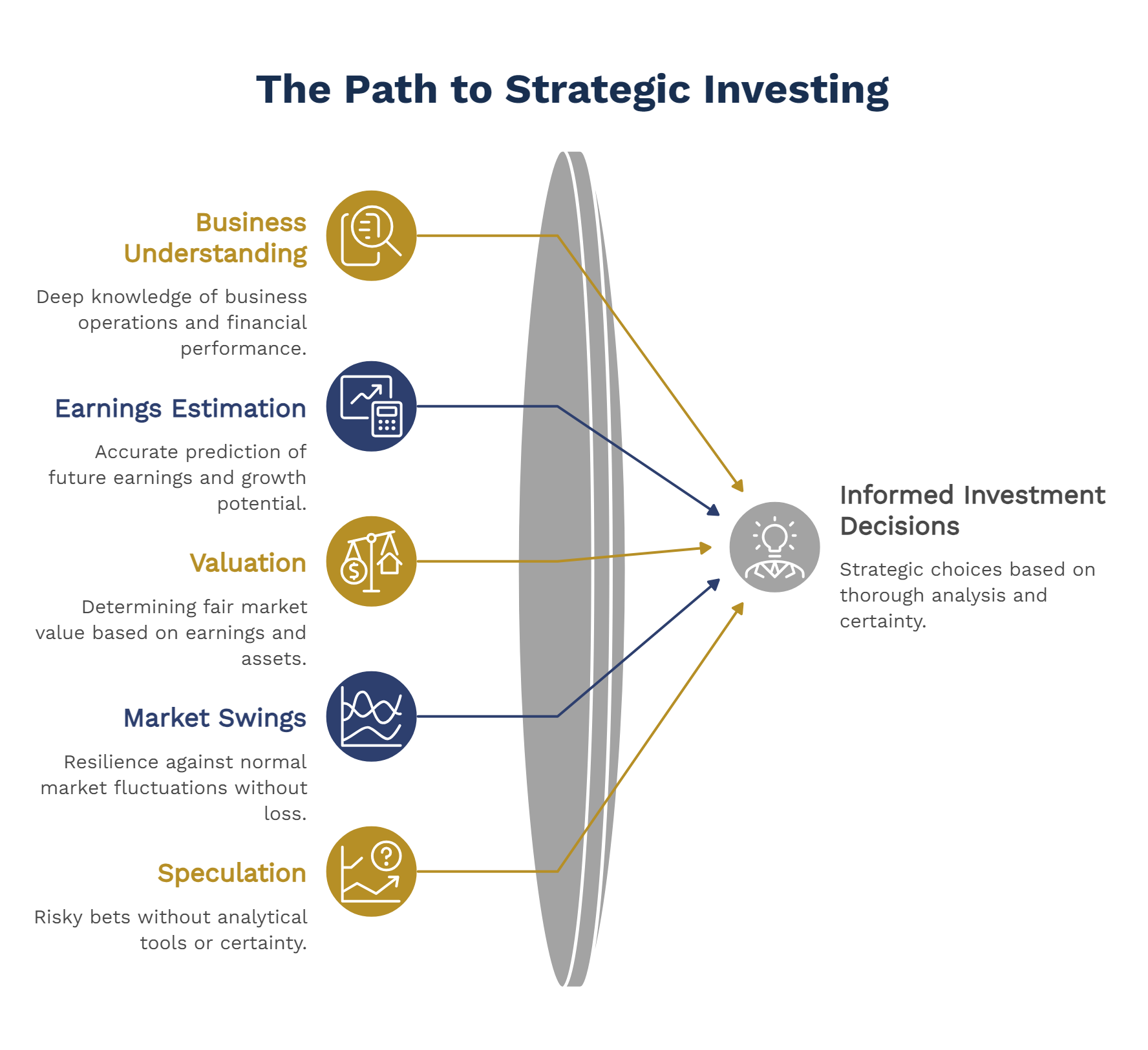
Here is how I separate the two. Investing means you have a high degree of certainty about where a business is going, so you can buy something worth ten dollars and pay five dollars for it. You understand the business, you can estimate what it earns, and the price gives you room for normal market swings without losing money.
Speculating is a bet on where something might go, made without the tools to price the bet. That is a different activity, and it deserves a different name.
Marks describes his process the same way I describe mine. Look at what a business earns today and what its earning power is building toward, estimate earnings five or ten years out, put a reasonable valuation on those earnings, then compare that to today's price. That is how Rule #1 investing works, and it is the whole job.
His conclusion about AI IPOs is that he has never seen an industry where that process is less feasible. There is no analytical, value-based way to decide whether to buy in, or at what price.
Marks does not use the word speculating as an insult. He uses it as a neutral description of a situation where the usual analytical tools don't apply.
I draw the line harder than he does. Some people think speculating is a kind of investing. I think it is a kind of gambling with a better vocabulary.
The Problem With Forecasting AI Earnings
Marks puts a sharp edge on it. He says that if somebody tells him what Anthropic's net earnings will be in 2036, he will bet they are not within 50% of the truth.
That is not a knock on AI. It is an honest read on what happens when a business is too new for anyone to know what it will produce in cash.
The second half of his argument is the part most investors skip. A forecast on its own is only half the work. You also need a judgment about the probability that your forecast is right, and for these companies that probability is unknowable.
Most people making bullish calls on AI IPOs never get to that second question, because the honest answer is that they have no idea.
Without a reliable read on future earnings growth, there is no Sticker Price. And without a Sticker Price, there is no Margin of Safety. What you are holding at that point is hope.
I've Seen This Pattern Before, and So Has Every Generation
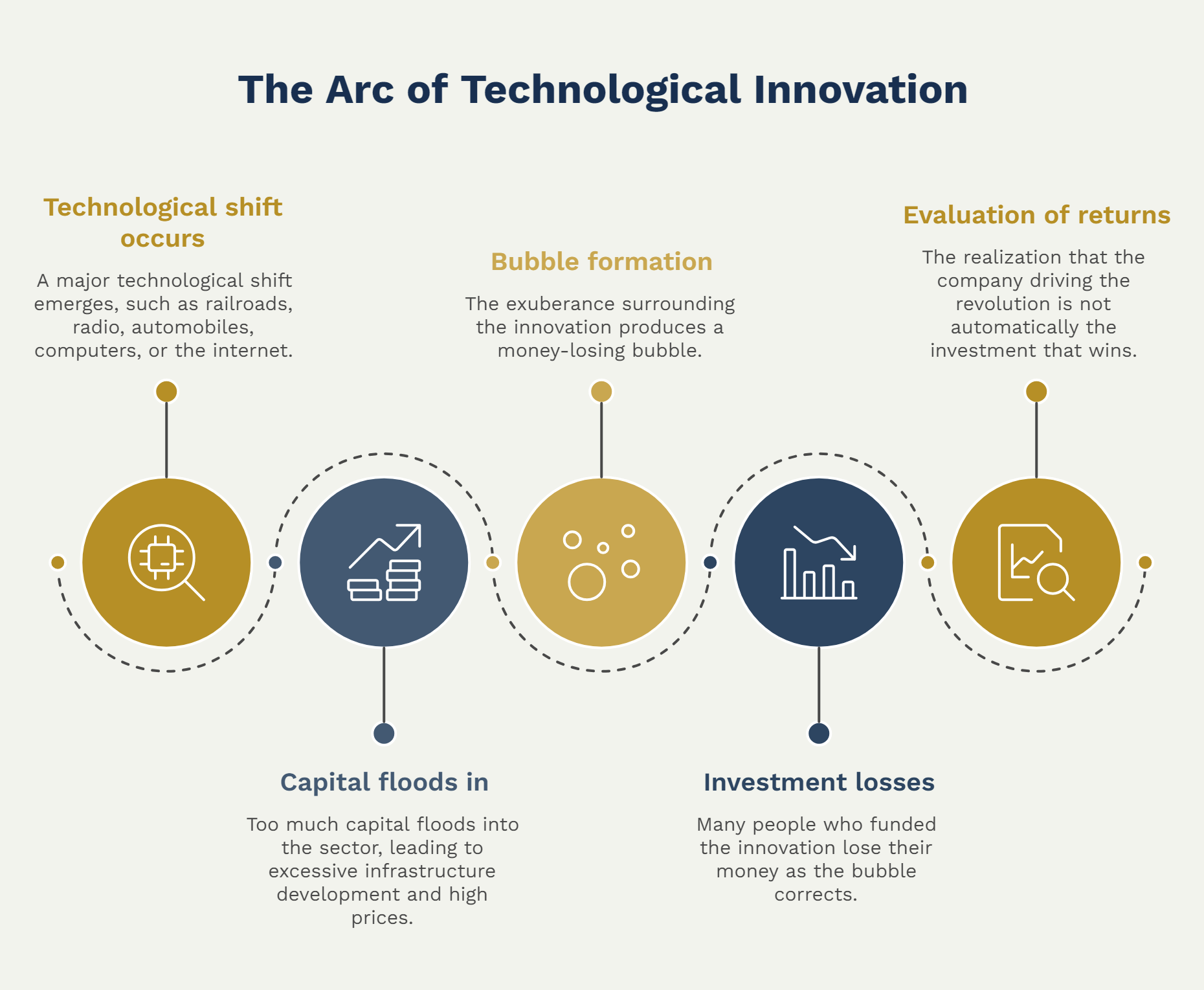
Every major technological shift of the last 150 years has run the same arc. The railroads in the 1860s, radio in the 1920s, the automobile, computers in the 1950s and 1960s, the internet in 2000.
In every case the technology was real and the disruption was real. Too much capital flooded in anyway, too much infrastructure got built, prices paid were too high, and a lot of the people who funded it lost their money.
Marks is direct about where that leaves us. If this innovation with all its exuberance "doesn't produce a money-losing bubble, it'll be the first."
He also gives AI its due, and this is the part that makes it harder than the dot-com bubble rather than easier. He thinks this may be the most powerful innovation of the group, and also the least specifiable from a starting point, because the upside is unlimited and so is the uncertainty. If you want the longer version of that comparison, I wrote about what 1999 teaches us about today's AI boom.
Being Right About the Technology Isn't Being Right About the Stock
Marks tells a story about Warren Buffett that makes this concrete. In the 1950s, at the dawn of the computer age, everyone could see computers were going to change the world, so buying IBM looked like the obvious call.
Buffett said you would have made more money buying the railroad.
That is the whole lesson in one line. The company that drives a revolution is not automatically the investment that wins it.
The question was never whether the technology is real. The question is whether today's price is fair against what the business will actually earn. For these offerings, I cannot answer that, and neither can anyone else.
What I'm Doing While Everyone Else Chases the Offering
What happens when a stock market bubble pops is not complicated, and it is not selective. The AI companies go down, and so does the gum company, the chocolate company, the railroad and the software business you have understood for years.
Mr. Market tears them all down together.
That's the setup, not a crisis. He misprices everything on the downside, and that is exactly when good companies go on sale.
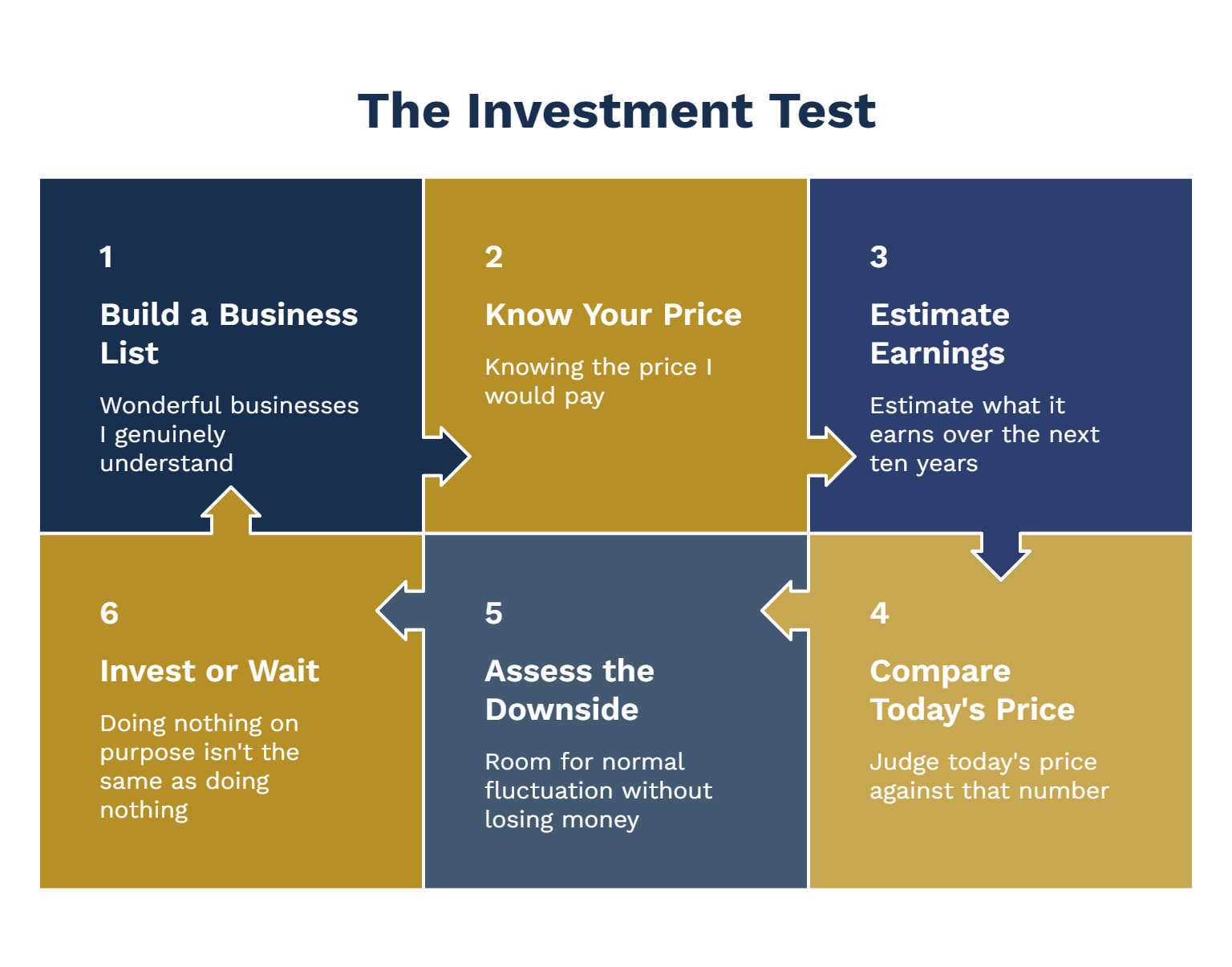
So my work right now is not finding an entry into an IPO. It is building a list of wonderful businesses I genuinely understand, businesses with a durable Moat, consistent Big Five Numbers and management I trust, and knowing the price I would pay for each one.
Berkshire Hathaway has spent years doing a version of the same thing, holding one of the largest cash reserves in corporate history because prices did not meet its standard. You can read more about what that cash pile signals.
Doing nothing on purpose isn't the same as doing nothing. It's a position, and it's the hardest one to hold.
The Standard I Hold Every Investment To
The test is two questions. Do I understand this business well enough to estimate what it earns over the next ten years, and does today's price leave me room for normal fluctuation without losing money?
Margin of Safety investing starts and ends with those two questions. It is also how I tell if a stock is overvalued, and the answer never comes from what the price did last month.
You work out the Sticker Price from the company's own earnings history and growth, then you judge today's price against that number. If you cannot estimate the earnings, you cannot run the comparison at all.
That is where AI IPOs land right now, and it has nothing to do with whether AI succeeds. It has to do with my Circle of Competence and the limits of the framework. When the cash flows cannot be estimated, the math cannot tell me what fair looks like, and that's just where the math stops, not a judgment call against the technology.
What This Doesn't Mean
I am not saying AI stocks are a bad investment. AI may turn out to be the most powerful technology of our lifetimes, and Marks thinks that is entirely possible.
The point is narrower than that. A business with no track record of earnings cannot be valued with confidence, so buying it is a bet rather than an investment. Those are different things whatever the outcome turns out to be.
The Bottom Line on Investing in IPOs
Three things are worth keeping. AI is probably a real revolution and probably a bubble, and both can be true at once.
There is no value-based way to price these offerings right now, which makes buying them speculation rather than investing.
And if you want to know how to prepare for a market crash, this is the whole answer. Build a list of businesses you understand, run each one through the Four M's, calculate the price that would give you a Margin of Safety, and hold enough cash to act when the selling comes.
Do that work before it arrives, not during. Howard Marks sharpened the framing for me here. The behavior is the same one I have taught for years.
Learn to Spot Wonderful Companies Before the Sale Starts
If this is a framework you want to apply to your own money, come learn it hands-on at the Virtual Investing Workshop, where you'll find current dates and pricing.
You will work through real companies with coaches beside you, calculate a Margin of Safety yourself, and leave with a watchlist you built rather than one somebody handed you. My goal has always been to teach you how to take control of your own finances instead of paying someone else for a mediocre result.
Show up ready to learn and I will make sure you know what you are doing.
Now go play.
Rule One Investing provides investment education and training only. We do not provide personalized investment advice, manage client assets, or guarantee investment returns. All content is for informational purposes. Consult a qualified financial professional before investing. Past performance does not guarantee future results. Individual results vary.
About Phil Town
Phil Town is an investment advisor, hedge fund manager, 3x NY Times Best-Selling Author, ex-Grand Canyon river guide, and former Lieutenant in the US Army Special Forces.
He and his wife, Melissa, share a passion for horses, polo, and eventing. Phil's goal is to help you learn how to invest and achieve financial independence.
Get Phil's Free Guide