








Investing for a Better Life: How Financial Freedom Lets You Live on Your Own Terms
 Phil Town
 In This Article
- Here are three reasons why you should listen to this episode:
- Resources
- The Vital Life: What Financial Freedom Actually Means
- Why the Traditional Path Feels Broken
- The River Guide Lesson: Recognizing Opportunity When It Appears
- It's Not a Game Where IQ Wins
- Investing Is a Practice, Not a Performance
- How Rule #1 Investing Gives You the Freedom to Choose Your Life
- Danielle Town: Attorney, Author & Investing Advocate
- Your Vital Life Is Waiting
For many people, the idea of investing for a better life feels out of reach. Housing costs more than it used to. Student debt lingers. Wages haven't kept up. And working hard doesn't always feel like enough anymore. If you've felt that way, you're not alone.
In this episode of the InvestED Podcast, we explore what investing for a better life truly means. We look at the idea of living a vital, purposeful life and how financial freedom creates the space for it. We discuss why discipline matters far more than intelligence when it comes to learning to invest. We also share why building an investing practice is a lot like learning to meditate: the results show up in your life over time, not in the moment.
Investing is about more than building wealth. It's about building the freedom to choose how you live. Tune in to discover how Rule #1 investing can help you take that first step toward a life that's truly your own.
Here are three reasons why you should listen to this episode:
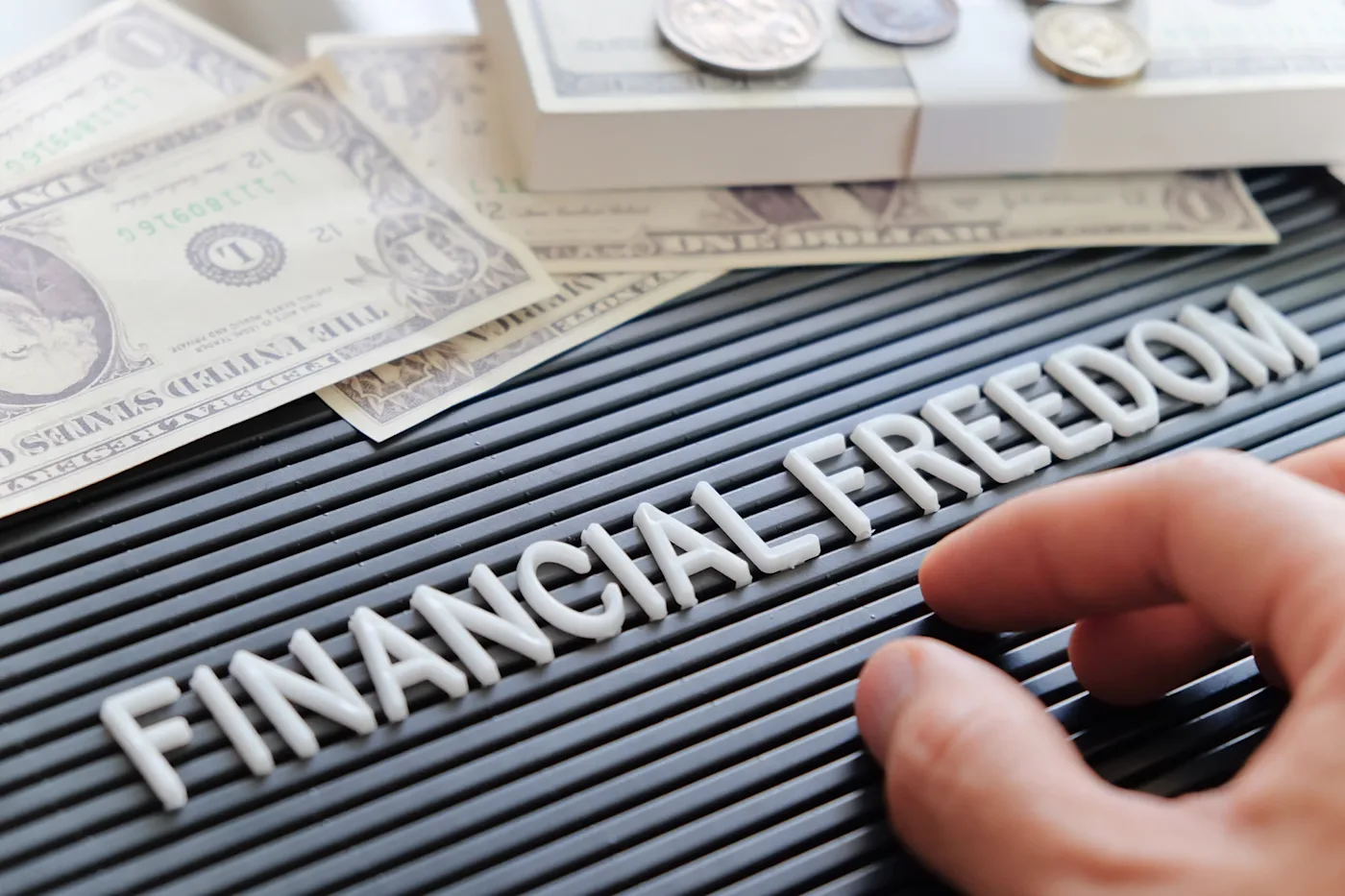
Discover why financial freedom is really about the life it lets you live, not just the number in your account, and why that shift in thinking changes everything about how you approach investing.
Learn how a moment of decisive action on a whitewater river became a powerful lesson in recognizing opportunity, and why that same instinct can be developed by any investor.
Understand why discipline matters more than IQ in this game, and how building a steady investing practice pays off in your life long before you see it in your portfolio.
Resources
Rule #1's "InvestED" Podcast and Website: Website | Apple Podcast | YouTube
Visit Rule #1 for more investing resources: Website | Facebook | LinkedIn | X (Twitter) | Instagram
Danielle Town: Website | LinkedIn | Instagram | Facebook | YouTube | X (Twitter)
The Vital Life: What Financial Freedom Actually Means
Years ago, I came across a book about the Comanches and one idea has stuck with me since. Everything mattered to them. Every person mattered. That was the kind of life they fought hard to preserve.
I had something like that during my years as a river guide. I wasn't making much money. I wasn't building a career in any traditional sense. But what I did mattered every day, all day long. When you're out on the river with a boat full of people, every decision counts. That sense of purpose is what I mean by a vital life.
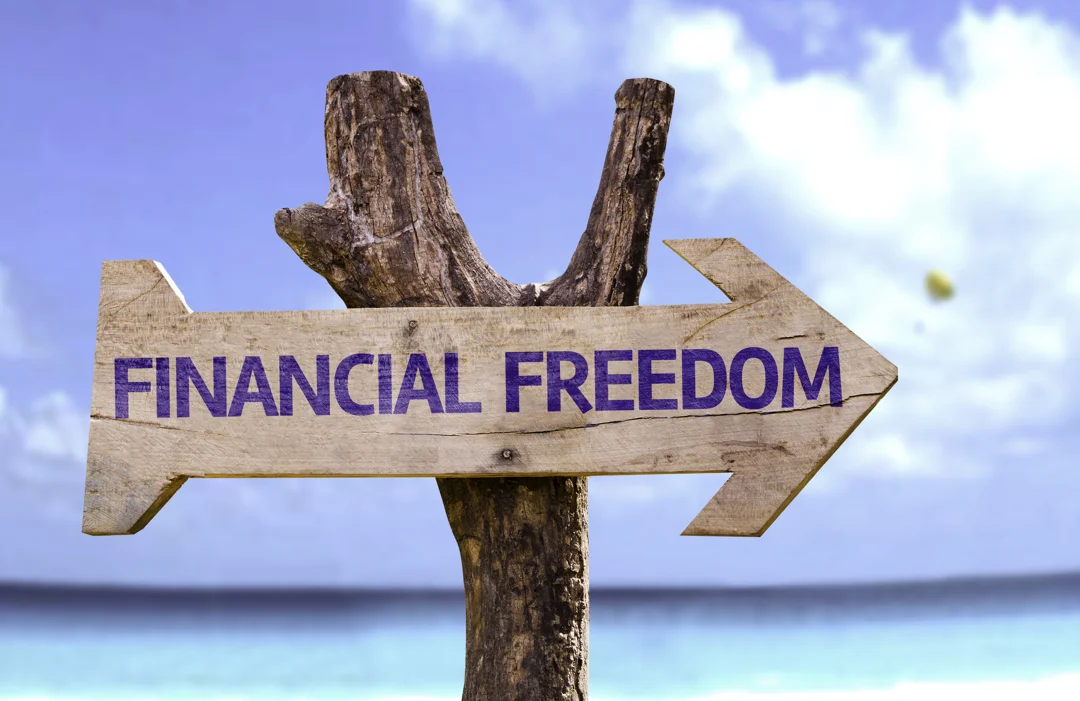
Investing gave me the ability to keep living that way, but on my own terms. When you build real financial freedom, you get to choose how you spend your time. You're not locked into work you don't believe in just to pay the bills. You can do something that matters to you and makes a real difference to the people around you.
A vital life looks different for everyone. Maybe it's starting a business. Maybe it's spending more time with your family. Maybe it's doing work you actually care about. Building financial freedom through investing gives you the ability to make that choice. That's what we're really working toward.
Why the Traditional Path Feels Broken
Many people in their 40s and 50s are feeling stuck right now, and not because they haven't worked hard. They studied, built careers, and kept showing up. But housing costs have outpaced wages for years. Student debt lingers. Basic expenses keep climbing. That frustration is real, and it's more common than most financial advice ever stops to acknowledge.
Danielle shares something worth noting. We have fewer opportunities to build a better life than our parents did, and far fewer than our grandparents. When her grandparents bought their first home, they could do it on one income from a job that didn't require an advanced degree. That's no longer true for most people. A standard salary in most American cities won't get you to a down payment. That's not a personal failure. It's just the reality a lot of people are working against right now.
How People Are Responding
Some people are responding by stepping away from the traditional path altogether, living more cheaply, moving somewhere remote, or giving up on homeownership entirely. Others are forming communal living arrangements or choosing to work nomadically, saving what they would have spent on rent or a mortgage. These choices make sense when the standard path feels closed off. There's no judgment in any of it.
A Different Kind of Answer
But there is another option. It doesn't require leaving the system behind. It requires learning to use it better. Rule #1 investing is built on the idea that ordinary people, using the same markets and tools that already exist, can build real financial freedom with a disciplined, principled approach. Most people are simply never taught how to do that.
If you've ever wondered whether there's a smarter path forward, our free Rule #1 investing course is a good place to start.
The River Guide Lesson: Recognizing Opportunity When It Appears
I was guiding commercial trips on the Tuolumne River in the 1970s. We were among the first guides to run it commercially, which meant we were learning the rapids as we went. On one of those early trips, a boat in our group missed a critical move on a difficult rapid and flipped. An older couple in the boat, both in their mid-60s, went into the cold water and didn't surface.
I was on shore, tied off, watching. I yelled at a guide to untie our boat, but the current had pulled the rope so tight he couldn't get the knot loose. So I jumped up, cut the rope, got back on the oars, and we swung out into the current. Just as we did, the woman surfaced. I grabbed her life jacket and pulled her in. A moment later her husband came up. I grabbed him too. They'd been underwater for close to 30 seconds.
When we finally got to shore, they were hypothermic. We built a fire, lashed our oars together into a frame, threw tarps over it, and heated rocks inside. We had turned our gear into a sweat lodge. It worked. They came back fast.
I didn't have time to think through options. The rope wasn't coming loose, so I cut it and moved. Preparation made that decision possible. Without the experience of running that river, I wouldn't have known what to do.
What the River Teaches Us About Market Opportunity
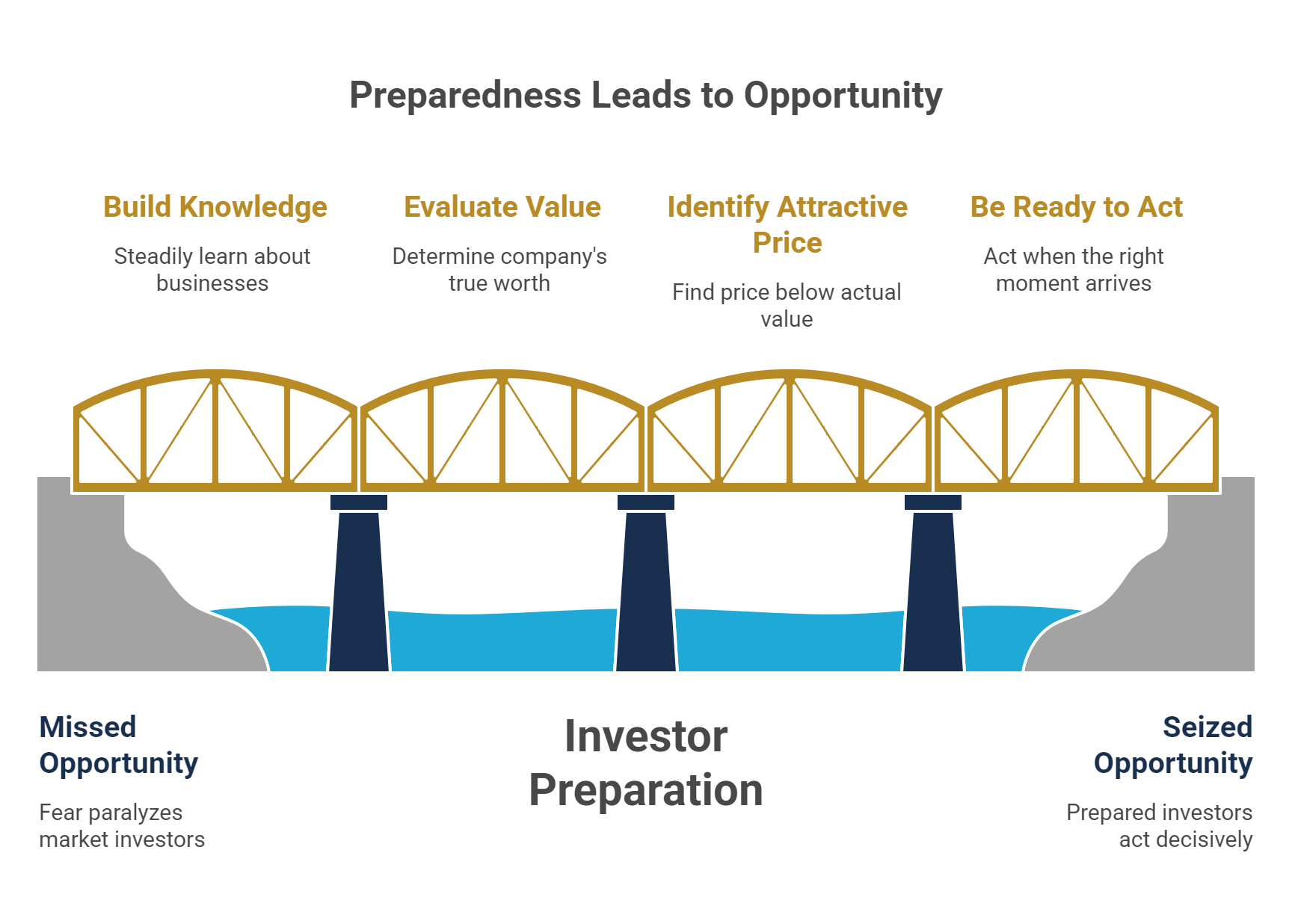
For investors, the lesson from that day is straightforward. Opportunities in the market don't come with a clear signal or a comfortable amount of time to think. They tend to show up when something has gone wrong, when the market is scared, when fear has pushed a good company's price well below what the business is actually worth. That's when a prepared investor can act.
The investor who acts in that moment isn't lucky. They're prepared. Here's what building that preparation looks like
Building your knowledge of businesses steadily over time
Learning to evaluate what a company is actually worth
Understanding when a price is attractive relative to that value
Being ready to act when the right moment arrives
That preparation is what makes the difference when the moment arrives.
It's Not a Game Where IQ Wins
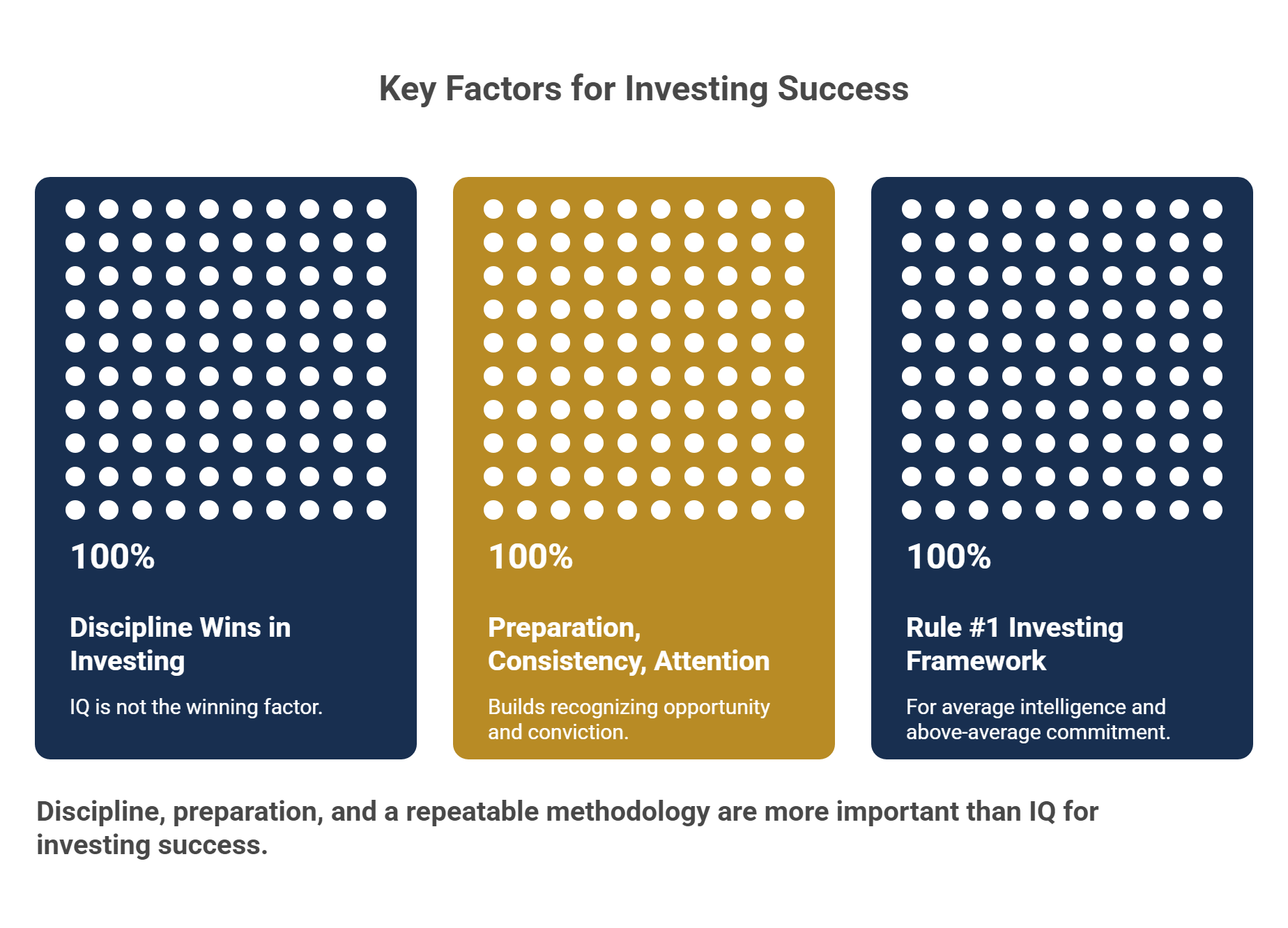
A lot of people look at legendary investor Warren Buffett and reach the wrong conclusion. They think: he can do it because he's brilliant, but that's not me. Buffett pushed back on this idea consistently. He said it over and over again: this isn't a game where IQ wins. This is a game where discipline wins.
If discipline is the real edge in investing, this is something anyone can develop. You don't need to be born with it. You build it.
The Belief That Holds Most People Back
I'll be honest with you. I have maybe an average IQ, possibly a little above. What I can do is work hard at something I care about. I can grind on something I really want to understand. That turns out to be exactly what this takes.
Danielle makes a good observation. When she talks about what sets someone up for success in investing, she isn't talking about intelligence. She's talking about two things that are actually quite different from each other:
Recognizing an opportunity when it appears
Having the conviction to act on it quickly
Neither of those comes from IQ. Both are built through preparation, consistency, and paying attention.
The Methodology Does the Heavy Lifting
Rule #1 Investing is built for people with average intelligence and above-average commitment to learning. The framework is clear and repeatable. It walks you through exactly what to look for in any business before you invest a dollar:
Meaning: Does this business have real meaning to you? Do you understand what it does?
Moat: Does it have a durable competitive advantage that protects it over time?
Management: Is the leadership trustworthy and focused on the long-term interests of owners?
Margin of Safety: Is it available at a price that genuinely protects your downside?
Learn this process and follow it with discipline. That's how ordinary people build real financial freedom.
Investing Is a Practice, Not a Performance
Danielle draws a comparison that gets to the heart of what building an investing practice actually feels like. The wrong question when learning to meditate, she says, is asking whether it's working while you're doing it. The experience in the moment isn't the point. The proof shows up in your life: you start to have better ideas, things start to work out, life gets better.
Danielle applies that same thinking directly to investing. It may not feel like it's working right now. It may not make sense yet. It may be frustrating. That's normal. The process is coming back to it, doing a little more, understanding a little more, reading a little more, and finding companies and subjects that genuinely interest you. Over time, it adds up to something that makes your life better.
That's an honest description of what learning to invest actually feels like. It doesn't follow a straight line. There's rarely a clear moment when it all clicks. It's a steady effort that builds quietly in the background.
What Consistent Practice Actually Looks Like
If you're wondering what this looks like week to week, here are the core activities that build a real investing practice:
Reading about companies and industries that interest you
Studying one business at a time to understand how it makes money
Learning to identify what gives a business a durable competitive advantage
Reviewing your research and decisions as you go
Building and updating a watchlist of businesses worth following
Coming back to it regularly, even when progress feels slow
None of these is complicated. The challenge is consistency, not complexity.
And then, as Danielle says, when that opportunity shows up, as it inevitably does, hopefully we can recognize it. The practice is what makes that recognition possible.
If you want to build that foundation faster, the Rule #1 Virtual Investing Workshop is a practical next step.
For $97, you get three days of live, hands-on investing education with Rule 1 mentors, real-time practice evaluating companies in small group sessions, and 10 Rule 1 approved companies to start your watchlist.
How Rule #1 Investing Gives You the Freedom to Choose Your Life
The goal of investing isn't to grind harder than you already are. It's to reach the point where you don't have to. You don't have to go down there and do nine to five for somebody selling Cheerios if you don't want to. And I say that with genuine warmth toward anyone who does. There is nothing wrong with Cheerios. I love Cheerios. But so many of us are locked in, not by bad choices or bad luck, but by the simple reality that we haven't yet built the financial freedom to do anything else.
That's what investing is actually for. Not to accumulate a number. To reach the point where work becomes a choice. Where you can do something that matters to you and makes a real difference to the people around you.
Danielle puts it well. She's found investing to be something rather extraordinary in her life. Not for what it is in isolation, but for what it makes possible. That's what we are working toward together. Building enough financial freedom to start living on your own terms.
If you're ready to start building that kind of freedom, the Rule #1 Virtual Investing Workshop is where we teach you how.
Expert Advice & Powerful Quotes
"This isn't a game where IQ wins. This is a game where discipline wins."
"It gives you the ability, if you're successful as an investor, you have the financial freedom to live a vital life... to do something that you consider that you're passionate about, that's vital, that's important, that makes a difference to your people."
"It may not feel like it's working right now... And over time, it adds up to become something that makes life better."
"When that opportunity shows up, as it inevitably does, hopefully we can recognize it."
"You have to use what society gives you and find a way to take that and make yourself free."
Danielle Town: Attorney, Author & Investing Advocate
Danielle Town is a best-selling author, attorney, and passionate advocate for empowering new investors. She has a background in law and a deep curiosity about financial independence. Danielle is dedicated to demystifying investing for anyone seeking financial control. She co-authored Invested, sharing her journey learning value investing with her father, Phil Town. Danielle believes anyone can build confidence in investing by focusing on clarity, patience, and wisdom.
Through her writing, podcasting, and teaching, Danielle helps others cut through the noise of the market. She guides people in developing sound investing habits that last. Her approach encourages aligning money choices with personal values and long-term goals. Danielle shows that investing is a lifelong practice, built on steady learning and self-awareness. She inspires anyone to take the first step and make smart, values-driven decisions.
Expertise: Value Investing · Financial Education · Personal Finance · Mindful Money Management
Danielle Town: Website | LinkedIn | Instagram | Facebook | YouTube | X (Twitter)
Your Vital Life Is Waiting
Investing for a better life is a long game. It rewards patience, consistency, and the willingness to keep showing up when progress feels slow. Rule #1 gives you a clear system to build that practice on.
Listen to the Full Episode — Danielle and I explore what it truly means to invest for a better life. We discuss a river rescue story that became a lesson in recognizing opportunity under pressure. We share why discipline matters more than IQ in investing, and how building an investing practice works a lot like meditation: the results show up in your life over time.
Reflect on Your Own Process — Consider what you are really working toward with investing. Are you doing it because you feel you should, or because you have a clear picture of the life you want to build? I hope this conversation is a good place to start thinking that through.
Explore More — Visit Rule #1 for more episodes and resources on building your investing discipline. Discover workshops, tools, and stories that support your journey to becoming a mindful and successful Rule #1 investor.
Financial freedom isn't the destination. It's what the destination makes possible. That's the Rule #1 way.

About Phil Town
Phil Town is an investment advisor, hedge fund manager, 3x NY Times Best-Selling Author, ex-Grand Canyon river guide, and former Lieutenant in the US Army Special Forces.
He and his wife, Melissa, share a passion for horses, polo, and eventing. Phil's goal is to help you learn how to invest and achieve financial independence.
Get Phil's Free Guide