









How to Build a Value Investing Checklist That You'll Actually Use
 Phil Town
 In This Article
- Here are three reasons why you should listen to this episode:
- Resources
- The Case for an Investing Checklist
- What Makes a Good Checklist
- The Nested Checklist Approach
- Starting Your Checklist: How Did You Find This Company?
- Building a Checklist That Works for You
- Expert Advice & Powerful Quotes
- Danielle Town: Attorney, Author & Investing Advocate
- Your Checklist, Your Edge
The whole idea behind Rule #1 Investing is simple: buy $10 bills for $5. That sounds like a great deal, and it is. But here is the catch: it only works if you can stay rational when everyone around you is panicking. Fear changes everything. It turns long-term thinkers into short-term reactors, and it turns great companies on sale into stocks people cannot sell fast enough. The investors who win are the ones who have a system that keeps them grounded when Mr. Market is doing his best to shake them loose. That system, at its core, is a checklist.
In this episode of the InvestED Podcast, Danielle and I dig into what separates a checklist that actually works from one that collects dust. We look at where the investing checklist idea comes from, why Charlie Munger had one even if he never called it that, and what the airline industry can teach us about building a framework that holds up when the pressure is highest.
Whether you are just getting started or refining the process you already have, I want to give you a practical way to build a checklist that matches how you actually think, one you will reach for every time you consider a new company. Tune in to discover how a short, well-built investing checklist may be one of the most powerful tools you develop on your path to financial independence.
Here are three reasons why you should listen to this episode:
Discover why most investing checklists are too long or too vague to use under pressure, and what the right structure actually looks like.
Learn how Charlie Munger's investment principles connect directly to Rule #1's Four M's and why that connection makes the checklist idea accessible to any beginner.
Get a clear starting point for building your own value investing
checklist, including the single most important question to ask before you dig into any company.
Resources
Rule #1's "InvestED" Podcast and Website: Website | Apple Podcast | YouTube
Visit Rule #1 for more investing resources: Website | Facebook | LinkedIn | X (Twitter) | Instagram
Danielle Town: Website | LinkedIn | Instagram | Facebook | YouTube | X (Twitter)
The Case for an Investing Checklist
Ben Graham built the foundation of this approach about 90 years ago, and the core idea has not changed. Buy when others are fearful. Sell when they are greedy. Every time the market swings into fear, great companies go on sale. The investor who stays rational in those moments gets the bargain. The one who does not ends up on the wrong side of that trade.
Staying rational is harder than it sounds. I used to think the best investors just developed that discipline over time and did not need a formal system. I assumed Warren Buffett and Charlie Munger worked entirely from experience and instinct. Danielle disagreed, and she came to our conversation with Poor Charlie's Almanac to back it up.
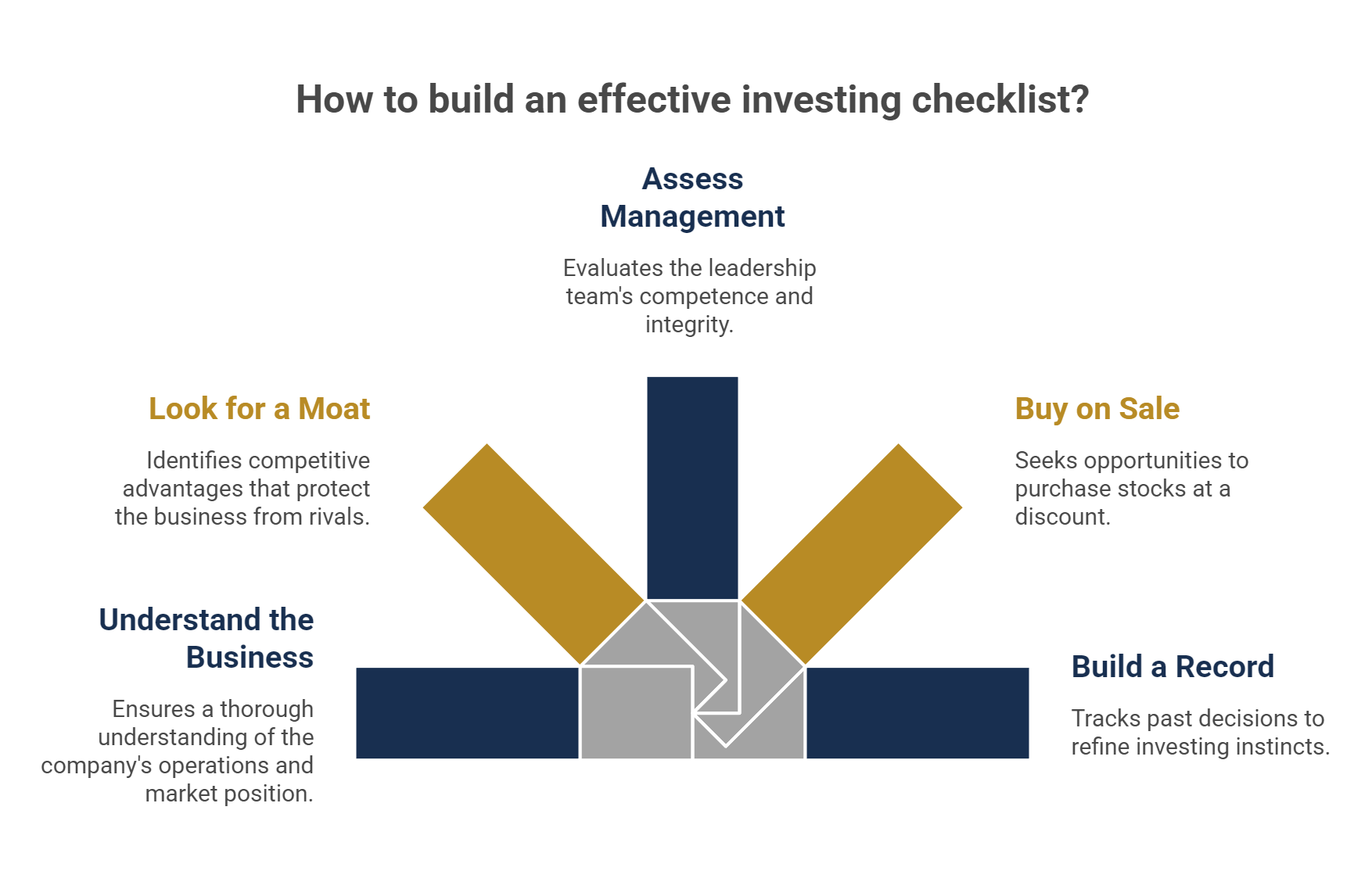
Charlie had a framework he returned to every time he evaluated a company. Understand the business. Look for a moat. Assess management. Buy it on sale. Four principles, applied consistently. That is a checklist, even if no one called it one.
A checklist does not eliminate emotion from investing. It gives you a process that works in spite of it. That is true whether you are just getting started or you have been doing this for decades.
What Makes a Good Checklist
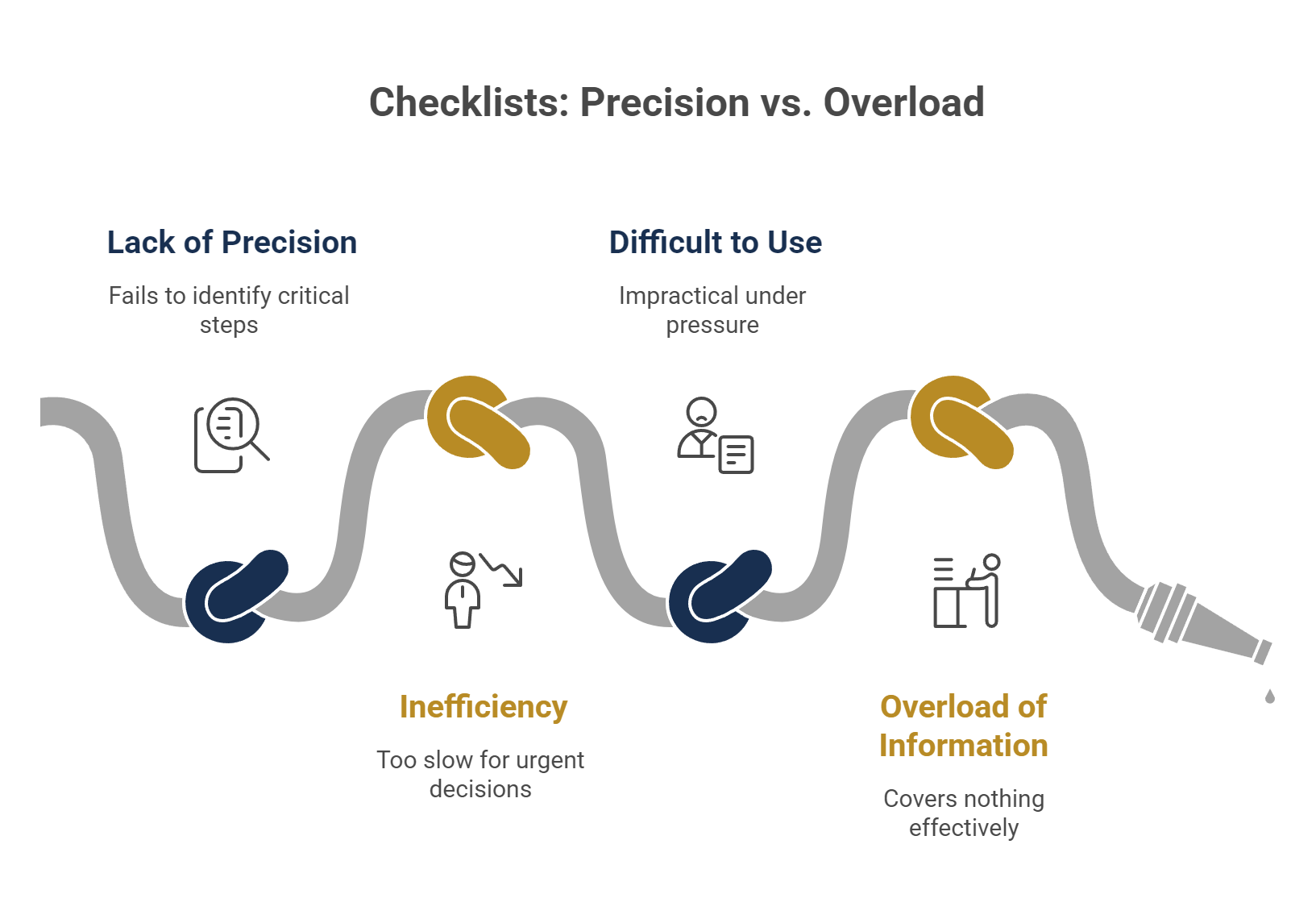
Shiraz Raza published a piece on Value Walk in December 2015 pulling together Charlie Munger's investment principles and checklists. Right at the top, he wrote something worth holding onto: "Good checklists are precise, efficient, easy to use even under difficult circumstances. Do not try to spell out everything and provide reminders of only the most critical and important steps."
That is the standard. Everything else flows from it.
The Airline Pilot Standard
Atul Gawande wrote a book on this called The Checklist Manifesto, and it is worth your time. His central point is that airlines do not just use checklists. They build them with discipline. A takeoff checklist does not try to cover every possible scenario. It covers the eight most critical items and nothing else. The co-pilot reads them aloud and you move.
The reason that matters is timing. If something goes wrong and you pull out a document that takes ten minutes to work through, you are already in trouble. Gawande puts it plainly: if a pilot cannot get to the problem fast enough, the checklist has failed its only job. That principle applies directly to investing. A checklist is most valuable when you are under pressure; when fear is rushing your decision or greed is making a bad idea look attractive. That is precisely when a document nobody can get through becomes useless.
The 148-Page Warning
Here is where it gets instructive. That same Shiraz Raza PDF I just quoted, the one that opens with such a clean definition of a good checklist, is 148 pages long. I am not making that up. It includes Howard Marks, Phil Fisher, Ray Dalio, Walter Schloss, and a dozen other great investors. Genuinely interesting material. Also not something anyone is reaching for in a real moment of decision.
Mohnish Pabrai built something similar, a checklist of more than 100 items drawn from years of Buffett and Munger letters, cataloguing every mistake and what caused it. The thinking behind it was sound. The result was a document so thorough it stopped getting used. I have been there myself. Once a checklist gets heavy enough, you stop reaching for it.
A checklist that tries to cover everything covers nothing. The goal is to capture the most critical steps and trust the process.
If you are ready to build a disciplined investing process from the ground up, the Rule #1 Virtual Investing Workshop is the place to start.
You will get hands-on guidance, proven frameworks, and the tools to begin evaluating real companies with confidence.
The Nested Checklist Approach
The solution to a checklist that is too long is not to trim it down. It is to break it into several short lists, each built for a specific phase of the process.
Airlines figured this out a long time ago. A complex aircraft does not run on one master checklist. It runs on a book of checklists; each one short, focused, and built for exactly that moment in the flight. The co-pilot reads the eight items, you work through them, and you move.
The same principle applies to investing. Instead of one document that tries to cover everything, build a separate checklist for each phase:
Find: How did I discover this company, and does it meet my starting criteria?
Evaluate: Does it pass the Four M's: Meaning, Moat, Management, and Margin of Safety?
Buy: Does the current price give me a true Margin of Safety before I commit capital?
Each list stays short enough to actually complete. Each phase gets its own focused set of questions.
As Danielle puts it, a checklist is a safeguard. A checkpoint against your own memory to make sure you have not skipped anything important before committing capital. The Four M's already give us that foundation. The nested structure makes it repeatable, phase by phase, every time.
Starting Your Checklist: How Did You Find This Company?
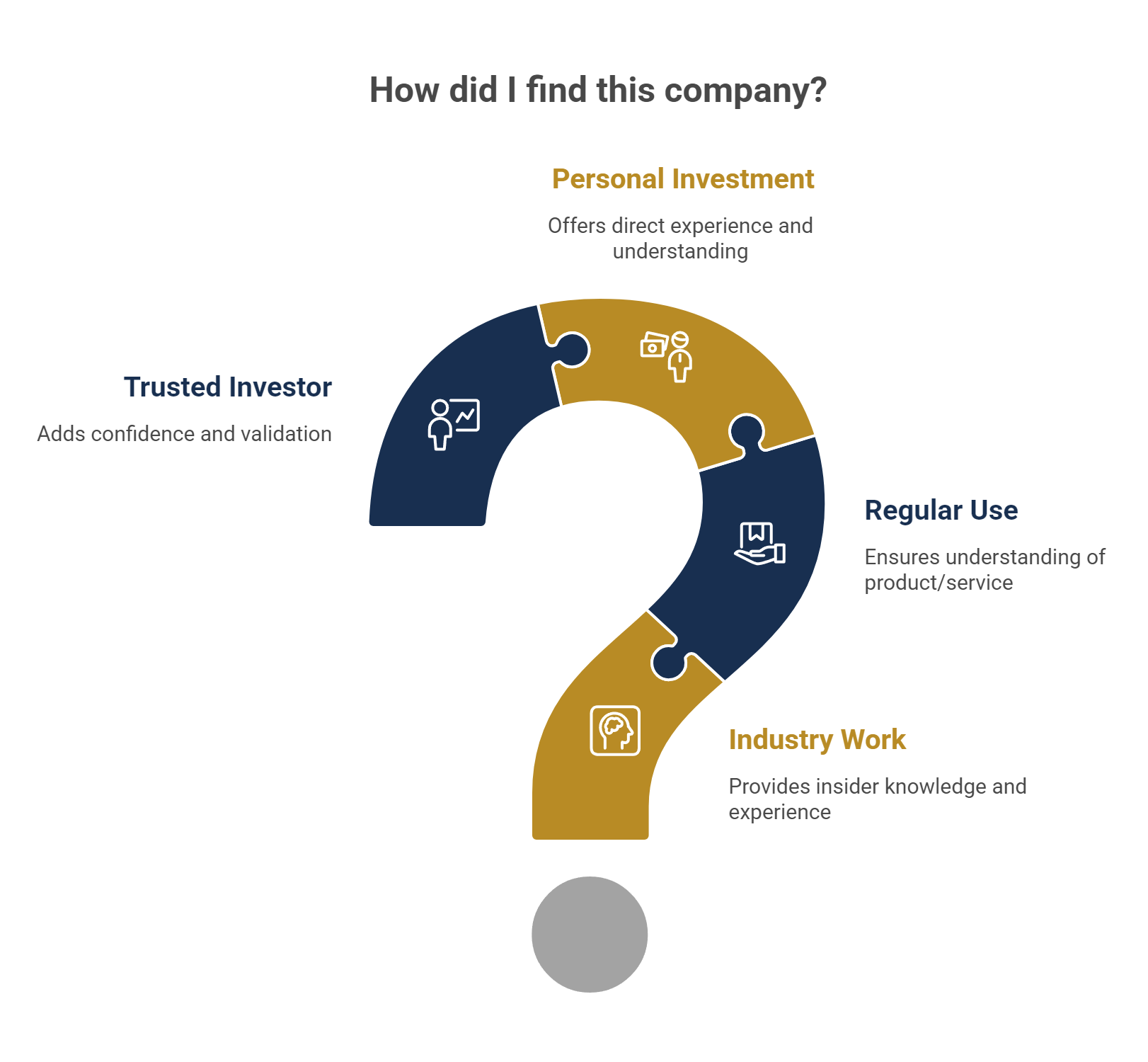
Before you go any deeper into a company, ask one question first. How did I find this? The answer tells you whether you are starting on solid ground or quicksand.
You want at least one of these to be true before you dig in:
I work in this industry or at this company
I use this product or service regularly
I have spent real time and money here and understand how it operates
A great investor I trust and follow is already buying it
That last point is the one I keep coming back to for new investors, because it adds a layer of confidence that research alone cannot provide.
The Power of Cloning a Great Investor
Charlie Munger has said it plainly, and I agree: just clone somebody. Do not make it so hard that you are inventing the wheel.
If you find a company entirely on your own, with no one you trust also buying it, you are not going to have the confidence to put real money into it. A proven investor already in that position gives you an anchor while you are still building experience.
Danielle adds a valid point. Personal connection matters too. If you grew up in an industry, work at a company, or know somebody who works there, that knowledge is real.
The strongest starting position combines both. A great investor is already buying it, and you have a meaningful connection to understanding the business. When those two things are true, you are on solid ground before you have opened a single financial statement.
Building a Checklist That Works for You
Here is something Danielle said that every investor needs to hear. A checklist only works if you will actually use it.
If a 90-item list makes you feel like a failure every time you open it, you will stop opening it. If a 4-item list feels too loose to give you real confidence, it is not serving you either. The best checklist is not the most thorough one. It is the one that matches how you actually think.
You have to know yourself here. Ask the right question before you build anything:
Are you the kind of person who needs granular detail to feel in control before making a decision?
Or does a long list of unanswered questions make you less likely to act?
There is no wrong answer. But building a checklist that does not fit how you work means building one you will never reach for when it counts.
Start With the Four M's
The foundation I always come back to is the Four M's. Charlie Munger described his framework as four things:
Understand the business
Look for a moat
Assess management
Buy it on sale
That is your checklist. Short enough to complete under pressure. Rigorous enough to protect you from the biggest mistakes. Solid enough to build on as your confidence and experience grow.
If you are ready to work through the Four M's with real guidance and put your own process together, the Rule #1 Virtual Investing Workshop is where that work happens.
Build Your Own Record
One more habit worth adding, and this comes straight from Danielle. When you look at a company and decide to pass, write down why. Note where you found it and what made you walk away. Over time, that record becomes a log of how you think and how your investing instincts are developing. That is how a real, personal investing system gets built.
Expert Advice & Powerful Quotes
"Good checklists are precise, efficient, easy to use even under difficult circumstances. Do not try to spell out everything and provide reminders of only the most critical and important steps."
"Make sure you understand it. It's got a moat and it's got good management and you buy it on sale."
"Just clone somebody. Don't make it totally so hard that you're inventing the wheel."
"It has to be practical. You have to think about all these responses that you're going to have yourself. And that really takes knowing yourself and your own practice of investing."
Danielle Town: Attorney, Author & Investing Advocate
Danielle Town is a best-selling author, attorney, and passionate advocate for empowering new investors. She has a background in law and a deep curiosity about financial independence. Danielle is dedicated to demystifying investing for anyone seeking financial control. She co-authored Invested, sharing her journey learning value investing with her father, Phil Town. Danielle believes anyone can build confidence in investing by focusing on clarity, patience, and wisdom.
Through her writing, podcasting, and teaching, Danielle helps others cut through the noise of the market. She guides people in developing sound investing habits that last. Her approach encourages aligning money choices with personal values and long-term goals. Danielle shows that investing is a lifelong practice, built on steady learning and self-awareness. She inspires anyone to take the first step and make smart, values-driven decisions.
Expertise: Value Investing · Financial Education · Personal Finance · Mindful Money Management Danielle Town: Website | LinkedIn | Instagram | Facebook | YouTube | X (Twitter)
Your Checklist, Your Edge
Every serious investor needs a system they can actually use when the pressure is on. A well-built investing checklist is not about covering every possible scenario. It is about identifying the most critical questions, putting them in the right order, and trusting the process to keep you rational when emotion is pulling you in the wrong direction.
Listen to the Full Episode: In this InvestED Podcast episode, we break down the principles behind a great investing checklist, what makes one work, what makes one useless, and how to start building your own. The conversation covers the Munger framework, the airline pilot model, and the first question every investor should answer before they dig into a new company.
Reflect on Your Own Process: Consider whether you have a system you actually use when evaluating a company, or whether you are relying on memory and instinct when the pressure is on. Think about what your checklist should look like, how long it should be, and whether it matches your own personality as an investor.
Explore More Visit Rule #1 for more conversations and resources on building your investing discipline. Discover workshops, tools, and stories that support your journey to becoming a mindful and successful Rule #1 investor.
A good investing checklist is not a sign that you do not trust your judgment. It is a sign that you respect the process enough to protect it. That is how Rule #1 investors work.
Ready to build yours? Join us at the Rule #1 Virtual Investing Workshop for hands-on guidance and real company analysis.

About Phil Town
Phil Town is an investment advisor, hedge fund manager, 3x NY Times Best-Selling Author, ex-Grand Canyon river guide, and former Lieutenant in the US Army Special Forces.
He and his wife, Melissa, share a passion for horses, polo, and eventing. Phil's goal is to help you learn how to invest and achieve financial independence.
Get Phil's Free Guide