
Most investors spend a lot of time thinking about what to buy. They research companies, run the numbers, wait for the right price. That part feels exciting. But when it comes to selling? That is where most people get stuck.
And honestly, that makes sense. Selling feels final. It is easy to second-guess yourself, especially when markets are moving and emotions are running high.
Here is what I have learned after decades of investing: the difficulty is not the decision itself. It is not having a clear framework for making it. Once you have that, the sell decision becomes a lot less stressful.
Rule 1 has a framework for selling, just like it does for buying. It is grounded in the same principled thinking that guides every step of the process: Find, Evaluate, Value, Buy, Manage, Sell. Selling is not separate from your strategy. It is the final step in a complete system.
There are three conditions that justify selling a wonderful company. Outside of those three, patience is almost always the right move. I am going to walk you through each one, explain the one wrong reason most investors sell, and give you the tools to make this decision with confidence instead of fear.
When Is the Right Time to Sell a Stock?
If you have done your homework and bought a wonderful company at a great price, selling is probably the last thing on your mind. That is exactly where you want to be.
But there are moments when selling is the right call. Knowing the difference between those moments and the ones where you should simply hold is what separates a disciplined Rule 1 investor from someone who is just reacting to the market.
Over the years, I have found that there are three legitimate reasons to sell a stock. I call these the three sell signals:
When the Fundamentals of the Company Change
The stock price has reached its Sticker Price
A better Rule 1 opportunity exists and you need the capital
If your reason for selling does not fall into one of these three categories, it is worth pausing before you act. More often than not, what feels like a reason to sell is actually a reason to hold, or even buy more.
These signals are not just my own thinking. They are consistent with how Warren Buffett and virtually every serious value investor approaches the sell decision. And they are the same principles I teach inside our value investing framework at Rule One.
Let's walk through each one.
When the Fundamentals of the Company Change
When I buy a business, I build a story around it grounded in the Four M's. I understand what it does and why it matters (Meaning). It has a durable competitive advantage (Moat). The people running it act like long-term owners (Management). And I bought it at a price that gives me a real Margin of Safety.
That story is the reason I own it. When the story changes, the reason to own it changes too.
Key Indicators of Fundamental Changes:
Management Changes
A new CEO or leadership team may have different strategies that could adversely affect the company's success.
Market Disruption
The introduction of disruptive technologies or powerful new competitors might weaken the company's competitive advantage or "moat."
Regulatory Changes
New laws or regulations can significantly alter the profitability and future prospects of a company.
For example, Kodak was a dominant force in photography for decades but failed to adapt to digital technology, fundamentally changing its investment story. Investors who recognized this early would have benefited by selling at the right time.
Sell a Stock When the Price Has Reached the Sticker Price
Here is the most important thing I can tell you about selling: you should know your exit price before you ever buy.
That exit price is the Sticker Price which is the calculated true value of the business. As a Rule One investor, I buy wonderful companies at a significant discount to their Sticker Price. That discount is my Margin of Safety. It protects me if my assumptions are off. It is the entire basis of the buy decision.
So when Mr. Market comes back around and prices that same company at or above its Sticker Price, the Margin of Safety is gone. And when the Margin of Safety is gone, so is the reason to hold.
You sell. Full stop.
This is not about predicting the market or guessing at a peak. It is about knowing your number and acting on it with discipline. The Sticker Price is calculable before you buy. When the market price reaches it, that is your signal.
Evaluating Whether It Is Time to Exit
Before you sell, two questions are worth asking:
Has the growth story held up? Is the company still generating strong returns on reinvested capital? If the fundamentals remain solid and the price has simply risen to meet the Sticker Price, that confirms your thesis played out as planned. Time to take your gains and redeploy.
Is this a temporary overshoot or a real signal? Mr. Market sometimes gets overly optimistic and pushes prices well above Sticker Price on hype alone. Either way, holding a stock priced above its Sticker Price means your Margin of Safety is gone. That introduces risk that a Rule #1 investor does not need to take.
A Real-World Example: Harley Davidson
I calculated Harley's Sticker Price at $50. Here is how it played out:
January 2002: Market price reached the Sticker Price of $50. I was out.
January 2003: Price dropped back below Sticker. I bought back in.
2004: Price ran back up to $62, right at the Sticker Price. I was out again.
The business had not changed. The price had simply caught up to its value. That was my signal both times.
Early in his career, Buffett operated exactly the same way, calculating value first, buying at a discount, and exiting once the market price reached that value to redeploy capital into the next opportunity.
Calculate Your Sticker Price
You can find your own Sticker Price using the Sticker Price and Margin of Safety calculators on our site.
To understand how the Sticker Price is calculated from the ground up, this guide to intrinsic value and Margin of Safety walks through the full process.
Sell a Stock When You Have a Better Opportunity
It is always ideal to have cash available when a great opportunity appears. But sometimes the best opportunity comes along when your capital is already deployed. In those moments, selling one position to fund a better one is a perfectly valid move, even if the company you are selling has not fundamentally changed and has not reached its Sticker Price.
That said, you have to be honest with yourself here. The greener-grass trap is real. Constantly selling good businesses in search of slightly better ones is not discipline, it is distraction. The bar for this decision has to be high.
The Rule 1 Discipline Check
Before you sell one position to fund another, the new opportunity has to clear the same bar as everything else in your portfolio:
Does it pass all Four M's: Meaning, Moat, Management, and Margin of Safety?
Is it available at a significant discount to its Sticker Price?
Is it genuinely a better business at a better price or does it just feel that way right now?
If the answer to all three is yes, selling to upgrade your portfolio is not impulsive. It is exactly what a disciplined Rule One investor should do.
You are not chasing. You are upgrading.
Attend a Rule #1 Workshop
Learn how to conduct research, choose the right companies for you, and determine the best time to buy.
The Wrong Time to Sell a Stock: Price Drop Panic
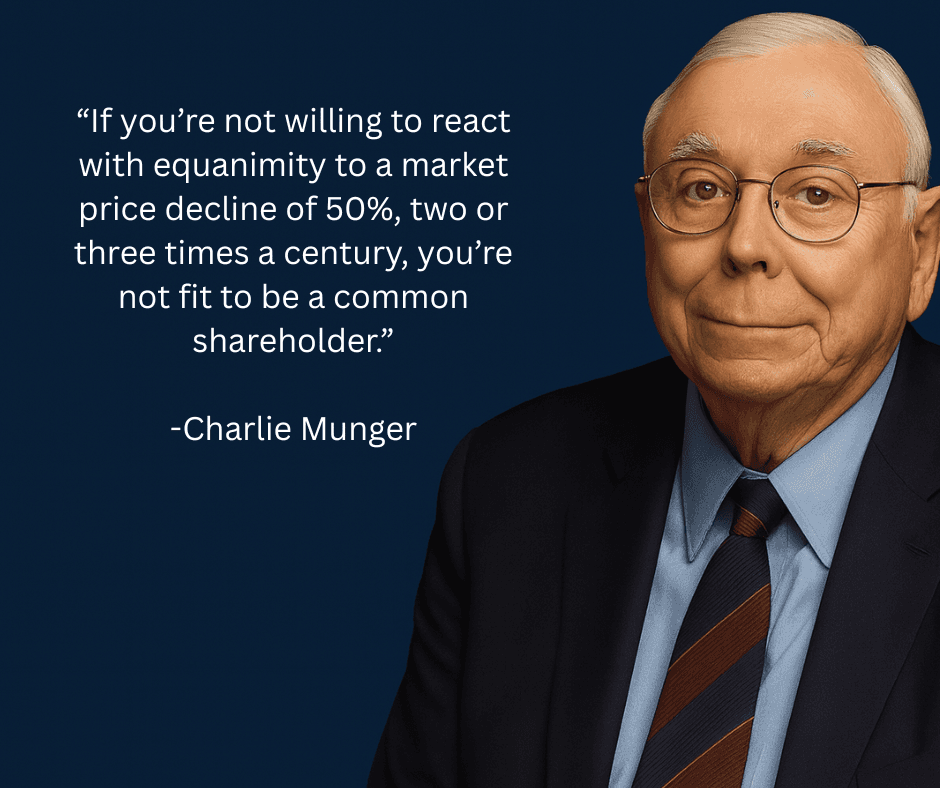
By far the worst reason to sell a stock is because the price dropped.
And yet it is the number one reason most investors sell. The price starts falling, fear kicks in, and people hit sell just to make the feeling stop. I understand it. It is a very human response. But it is also one of the most reliable ways to guarantee you never make real money in the market.
Remember Mr. Market. His pricing makes no sense from one day to the next. Some days he prices wonderful businesses high. Other days he practically gives them away. When he is having a bad day and the price of your wonderful company drops, that is not a warning. In most cases it is simply a discount on a business you already know and understand.
The question to ask is never "why is the price dropping?" The question is always: "Has the story changed?"
Before You Act, Ask Yourself
If you're tempted to sell due to fear, uncertainty, or temporary setbacks, consider the following:
Have the company's fundamentals genuinely changed?
Is this price drop temporary or is it reflecting a real problem in the business?
Would I still buy this stock today, knowing what I know right now?
If your honest answers point back to the Four M's still being intact, hold your position. The business has not changed. Only the price has.
Attend a Rule 1 Virtual Investing Workshop
At the Virtual Investing Workshop, you practice the full Rule 1 cycle, including how to calculate your Sticker Price and how to use the Tools to confirm your sell decisions.
Final Thoughts
What I want you to take away from this is simple. Selling is not a separate skill you figure out on your own. It is the final step in a complete system: Find, Evaluate, Value, Buy, Manage, Sell. Every step connects to the next. Every decision flows from the same Four M's framework you used to buy the business in the first place.
When you know the full cycle, the sell decision stops feeling scary. It becomes just another step in the process.
The Value Investing Cheat Sheet
Learn what 10 steps you should take to make smarter investing decisions