








Options Trading for Income: How Rule One Investors Make Money While They Wait
 Phil Town
 In This Article
- What Options Actually Are — Before We Go Any Further
- How Rule One Investors Use Put Options — Getting Paid While You Wait
- A Real-World Example — Selling a Cash-Secured Put on Sprouts Farmers Market
- Now Here's the Extra Fun Part — Using Covered Calls to Exit Your Position
- Why Warren Buffett Was One of the Biggest Options Traders in the World
- Want to Go Deeper? This Is Exactly What We Cover at the Workshop
This year, options trading has absolutely exploded, but really not in the way most people think.
It isn't just meme stocks and Reddit forums driving the volume anymore. Now it's zero-day options expiring within hours. It's AI stocks swinging 5% in a single day. And a large chunk of that activity is ordinary people placing leveraged bets from their phones, trying to make a bazillion dollars right away.
Here's what the data says about how that's working out for them.
From regulatory data and industry surveys, only about 10% of options traders make money over time. About 90% lose. Day trading is even worse. Over a five-year period, only 1% make money and 99% lose. FINRA, the private SEC regulator, reports that 72% of people lose money in year one doing that kind of trading.
So here's the part nobody talks about.
Some of the most disciplined value investors in the world, including people in Warren Buffett's orbit, actually trade options. Not to gamble. Not to desperately chase upside. They use options to lower their risk and increase their margin of safety.
I know that sounds completely backwards. But it's true, because I do it every single day.

What Options Actually Are — Before We Go Any Further
Before we get into the strategy, we need to make sure we're crystal clear on what options actually are.
At their core, options are simply contracts between two investors. There are two main types: calls and puts.
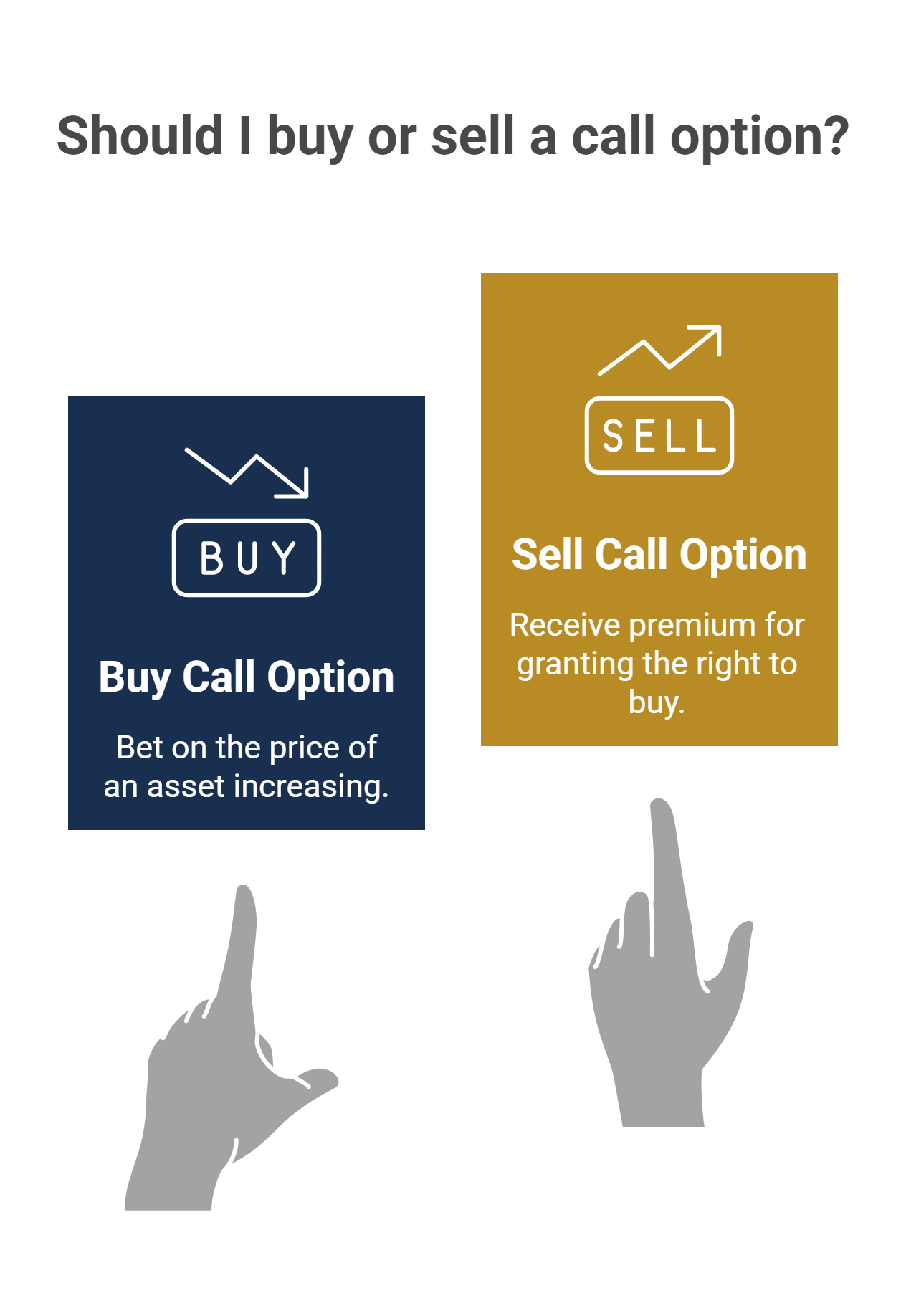
Call Options, The Guy Who Wants to Buy Your House
Let's say your house is on a golf course and it's worth about a million dollars. One day a guy in a suit comes to your front door and says, "I'd like to buy your house sometime in the next year for $1.5 million, and I'll pay you $20,000 right now for the right to do that."
What he's doing is betting $20,000 that a developer is going to come in and turn that golf course into a shopping center and your house will be worth $2 million. You do the deal because you were planning on moving anyway, and you get to keep the $20,000 no matter what happens. A year from now, if he buys your house for $1.5 million, you win. If he doesn't, you can sell it for a million and you still win. No matter what, you win. And you already got that $20,000.
That's a call option. He's the buyer of the option. You're the seller of the option.
The only difference between that example and the options market is that you don't have to wait for some guy to come to your door. You can do this deal any day, for many of the stocks you own.
Put Options, The Insurance Company Model
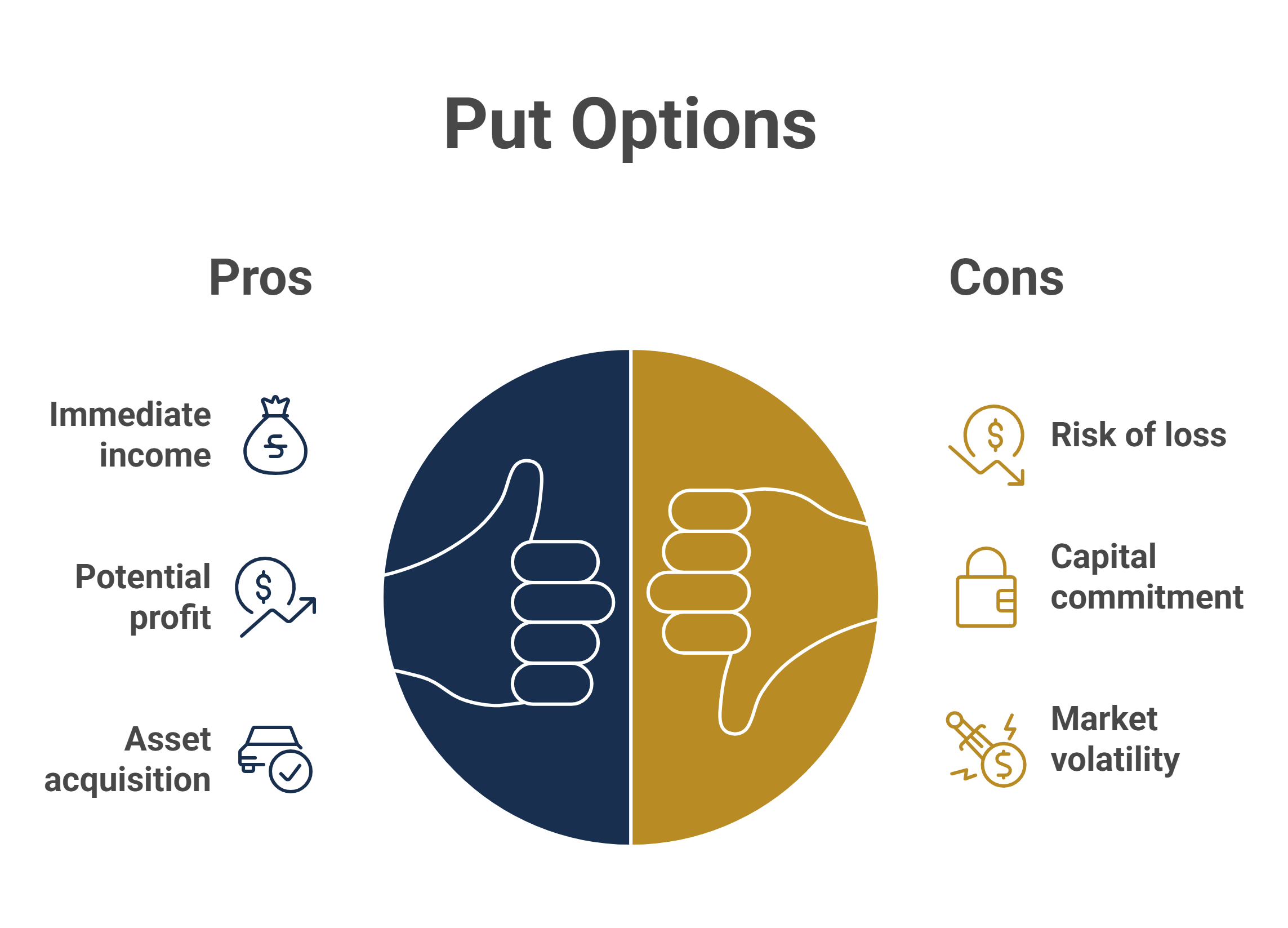
The other type of option is a put option. Think of it like a car insurance policy, except the way the legendary investor taught us to do it is that we are the insurance company.
Someone with a car is going to pay us an insurance premium to obligate us to pay for that car. If the value of the car drops to what we agreed to pay, they sell it to us at that price. We get paid immediately. And if we do this deal the right way, we are genuinely happy to buy the car at the set price because we already decided it was worth owning.
That last point is the whole game. I'll come back to it.
The Difference Between How Most People Trade Options and How We Do It
Now here's the key distinction between us and the vast majority of retail options traders who lose.
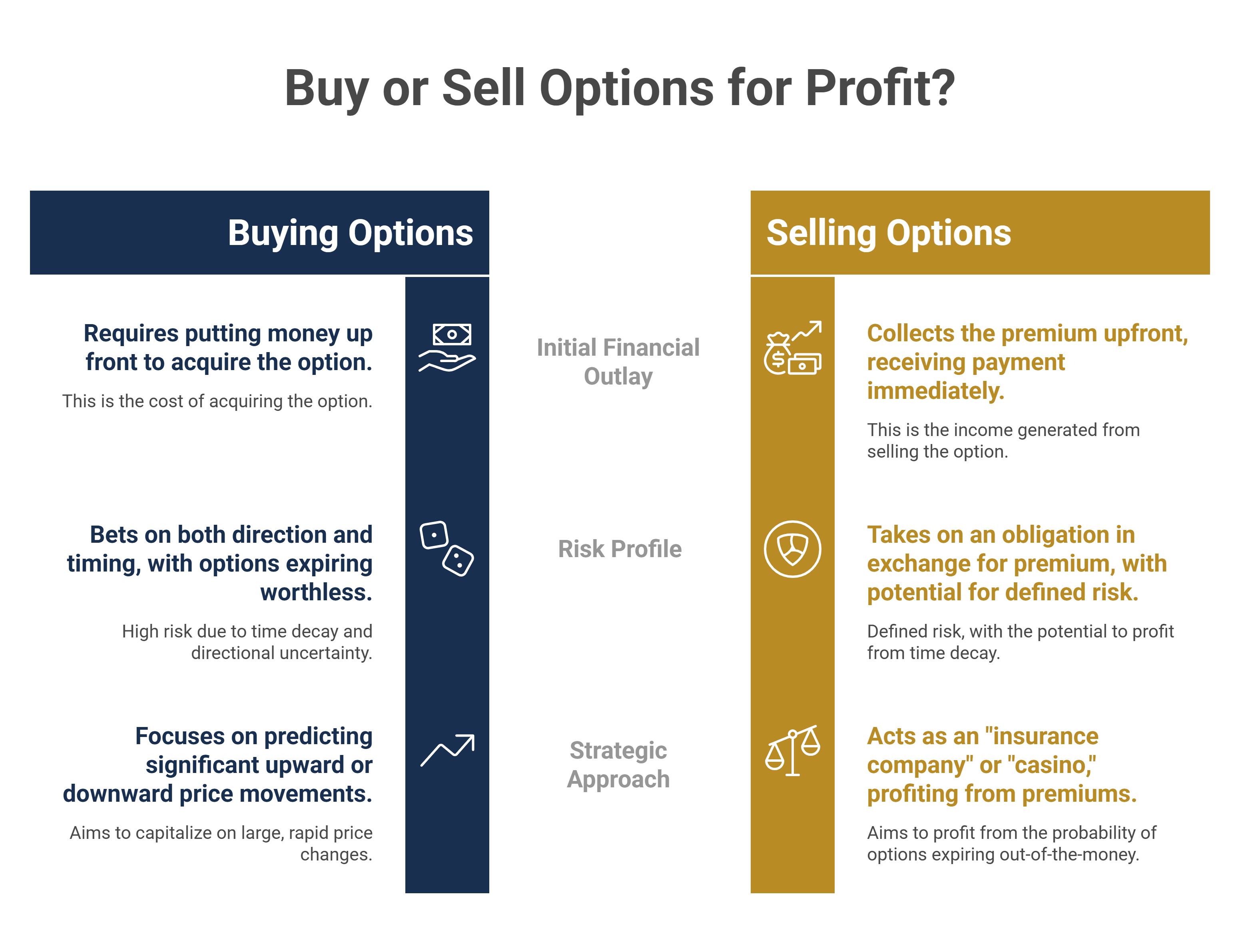
They focus on buying options. They put money up front. They buy calls when they think a stock is going to explode upward, and they buy puts when they think a stock is going to go down. And because options expire, they are not just betting on the direction. They are betting on the timing too. They have to be right, and they have to be right right now.
Rule One investors are a different breed. We flip this completely over on its head.
Instead of buying options, we sell them. We're the insurance company. We're the casino, if you want to think about it that way. But we're on the right side of the trade. When you sell an option, you collect the premium upfront. You get paid immediately. And in exchange, you take on an obligation you chose.
If you sell a call, you might have to sell your shares at a certain price. If you sell a put, you might have to buy shares at a certain price. But here's the thing. We can use this to our advantage. And this is something the legendary investor has done extensively throughout his career.
Let me show you exactly how it works.
How Rule One Investors Use Put Options — Getting Paid While You Wait
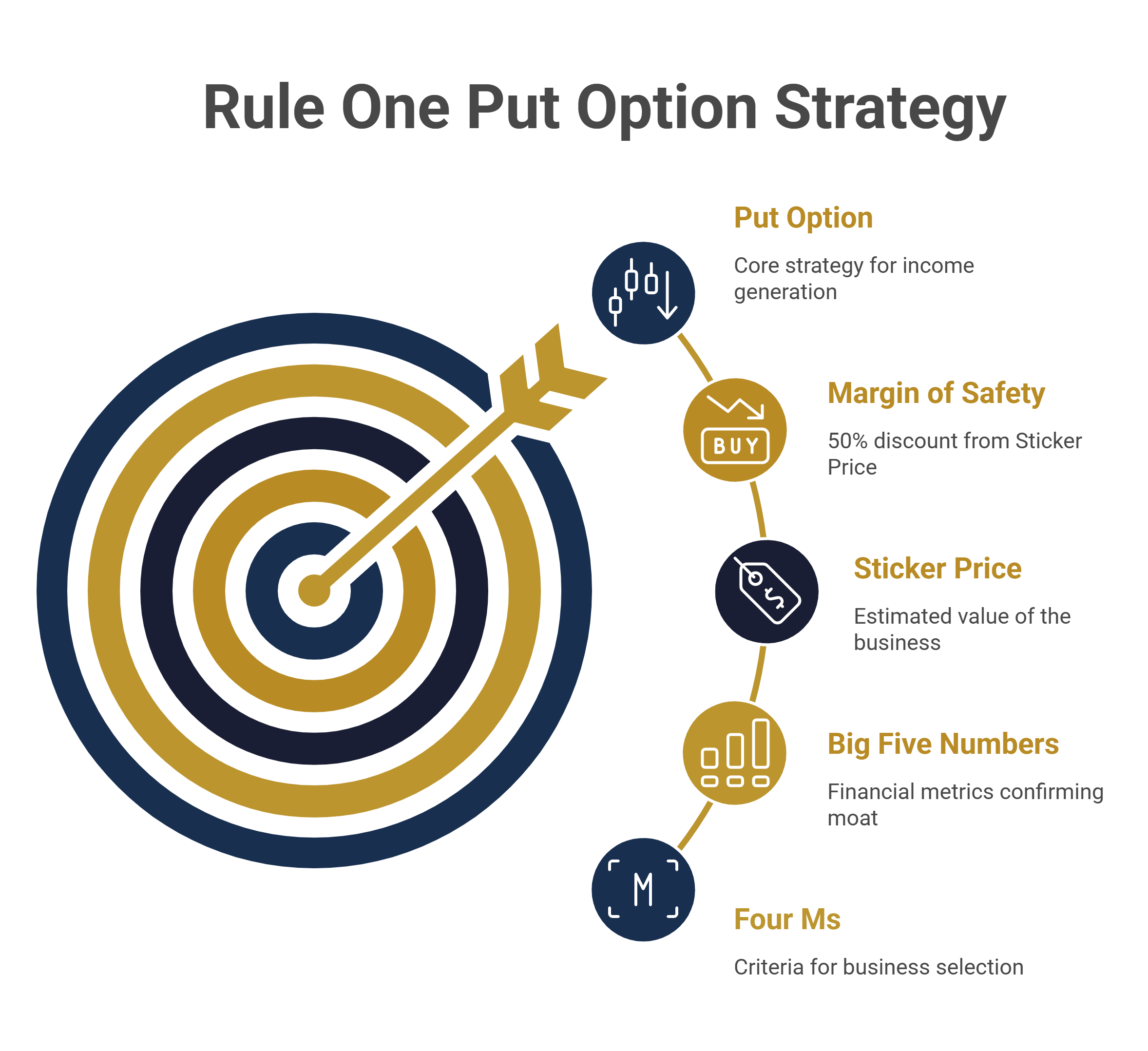
This strategy only works if you've already done your Rule One homework first. You need a business that passes the Four Ms test. You need the Big Five numbers to confirm the moat is real. And you need a Sticker Price so you know exactly what the business is worth and what you're willing to pay for it. That MOS price, 50% off the Sticker, is where this strategy starts.
Step 1: Find a Business That Passes the Four Ms
Think about this. I want to buy ABC Corporation. So I do my digging.
Meaning
I understand what this business does and I'm proud to own it. It's in my circle of competence.
Moat
The Big Five numbers are solid. ROIC, earnings, equity, sales, and free cash flow have all been growing consistently at 10% or better. The competitive advantage is real and durable.
Management
The people running it are honest and owner-oriented. They think like long-term owners, not hired hands.
Margin of Safety
After working through the numbers, I figure the business is worth about $50 a share. That's the Sticker Price. So the most I want to pay is $25. That's my margin of safety price, 50% off the Sticker. The stock is currently selling for $30.
Step 2: Sell the Put at Your MOS Price
Now I have two choices. I can set a limit order at $25 and wait around hoping the stock drops. Or I can sell someone the right to force me to buy it right where I already want to buy it, at $25.
If I do that and give them a year to exercise that right, they'll pay me $6 per share.
Think about that.
That's a 24% annual return on the $25 I'm obligated to pay for the stock. And I may never even buy it. In other words, I'm going to get paid a 24% annualized return without ever owning the stock.
Step 3: Both Outcomes Work in Your Favor
And if I am forced to buy it at $25? Well, I've been trying to buy it at $25 all along. So I'm even happier with that outcome. Because now my effective cost basis isn't $25. It's $25 minus the $6 I already collected. I'm in ABC Corporation for $19 a share.
That's my kind of deal. And that's why the legendary investor does this.
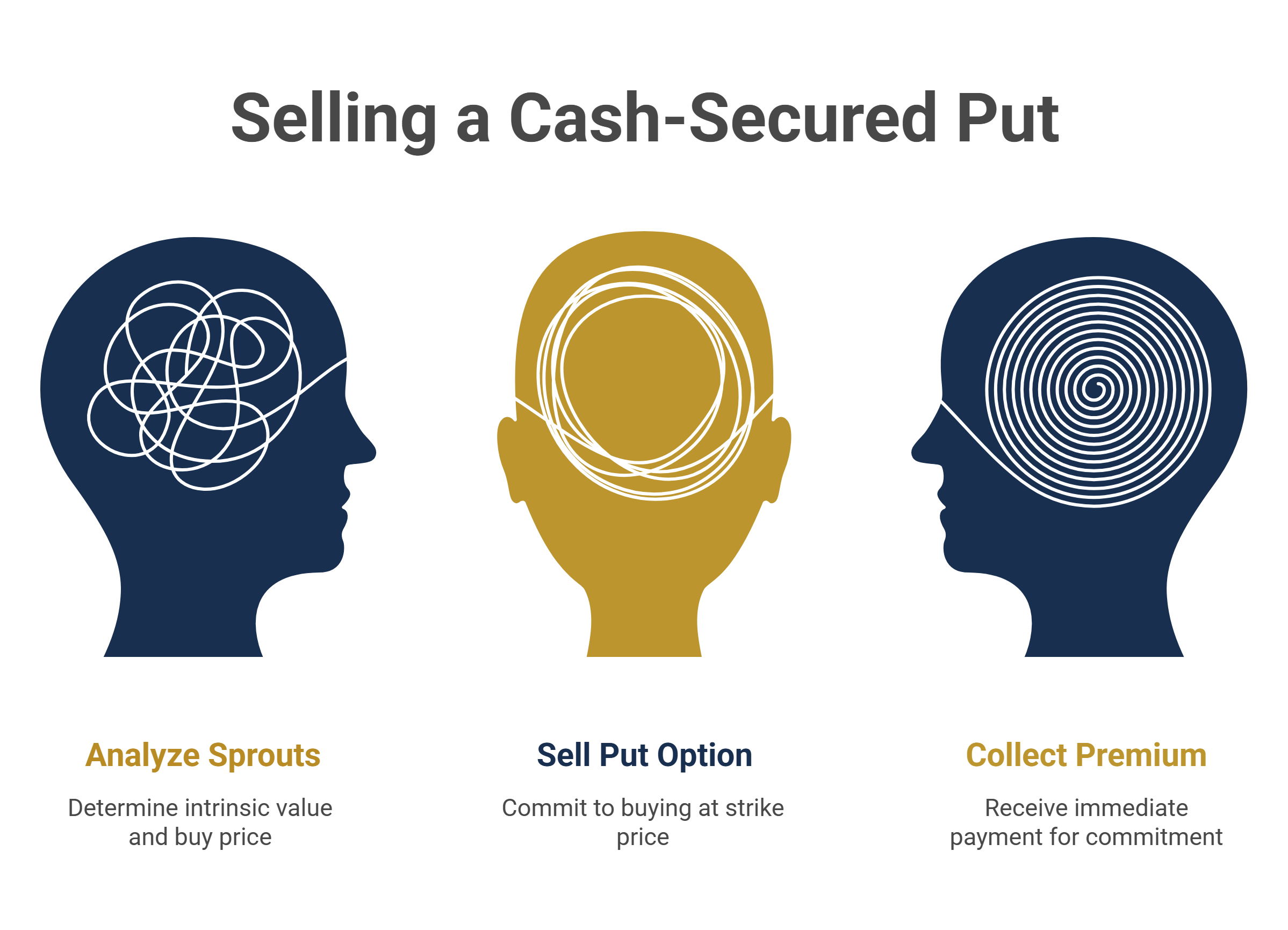
So instead of sitting on idle cash waiting for your margin of safety price to arrive, you sell a cash-secured put at that price and get paid while you wait. If the stock never gets there, you earned income on committed capital. If it does, you got assigned at exactly the price your Rule One analysis told you was the right entry point, and you were paid to make that commitment.
Both outcomes work in your favor. That's the whole point.
A Real-World Example — Selling a Cash-Secured Put on Sprouts Farmers Market
Now, imagine I've done the full Rule One analysis on Sprouts. I've gone through revenue growth, return on invested capital, free cash flow consistency, its competitive advantages, store growth, capital allocation. I've gone through the whole thing. After stress testing all the assumptions, doing the inversions, doing the rebuttals, and being conservative, I get to an illustrative intrinsic value of $140 a share.
Please note: this is just an example. I'm not saying I actually believe Sprouts is worth $140 a share. I'm using it to walk you through how the strategy works.
So if my illustrative intrinsic value is $140, then a 50% margin of safety puts my buy price at about $70. And look where the stock is sitting. At $78, it's close to that 50% discount but not quite there yet. I could consider buying the shares outright at a stretch, but being a Rule One investor, I want to be more disciplined. I only want to buy this stock at $70 or less.
Instead of placing a limit order at $70 and waiting around for something that might never happen, I sell a put option with a strike price of $70, expiring in one month. What am I doing when I do that? I'm telling the market: I am happy to buy Sprouts at $70 anytime in the next month.
And in exchange for making that commitment, I get paid immediately.
Let's say that one-month put at $70 is trading for around $1.50 per share. That means somebody is willing to pay me $1.50 per share for the right to sell me that stock at $70 if the price comes down. I collect that $1.50 per share immediately. And let's not forget that I put it straight in my pocket.
Outcome One — Sprouts Never Drops to $70
The option expires worthless. I keep the $1.50 and sell that put option again the following month. And the month after that. And the month after that.
Now, the premium is going to vary depending on what's going on with the underlying stock. But let's say simplistically that over a year I collect $1.50 a month. That's $18 collected on $70 of capital set aside per share. In this illustrative example, that works out to a 25.7% annualized return.
Just for being willing to buy a business I already wanted, at my margin of safety price, and it never happened.
That's a pretty attractive return on idle cash.
Outcome Two — Sprouts Drops to $70
At some point during that year, Sprouts drops below $70 and I get assigned. I'm required to buy the shares at $70. But let's say this happened in the last month, meaning I'd already collected $18 in premiums over the prior eleven months.
My effective purchase price isn't $70 anymore. It's $52.
By my illustrative calculation, I just bought a business I believe is a $140 value for an effective price of $52. That's way more than a 50% margin of safety. And I was paid to make that commitment.
Now here's what I want you to take away from both of those outcomes.
I'm not predicting what Sprouts does over the next quarter. I'm not betting on momentum. I'm not trying to outspin the market. I'm setting a Rule #1 buy price based on the intrinsic value of this company and using the options market to improve my entry point.
If Sprouts never drops to $70, that's okay. I earned strong income on my idle cash and I can go find another opportunity. And if it does drop, even better. I got the business I wanted at a price well below what I believe it's worth.
The key point is this. I'm not using options to increase my risk in order to hit a home run. I'm using them to structure discipline.
And that is a very different thing.
Now Here's the Extra Fun Part — Using Covered Calls to Exit Your Position
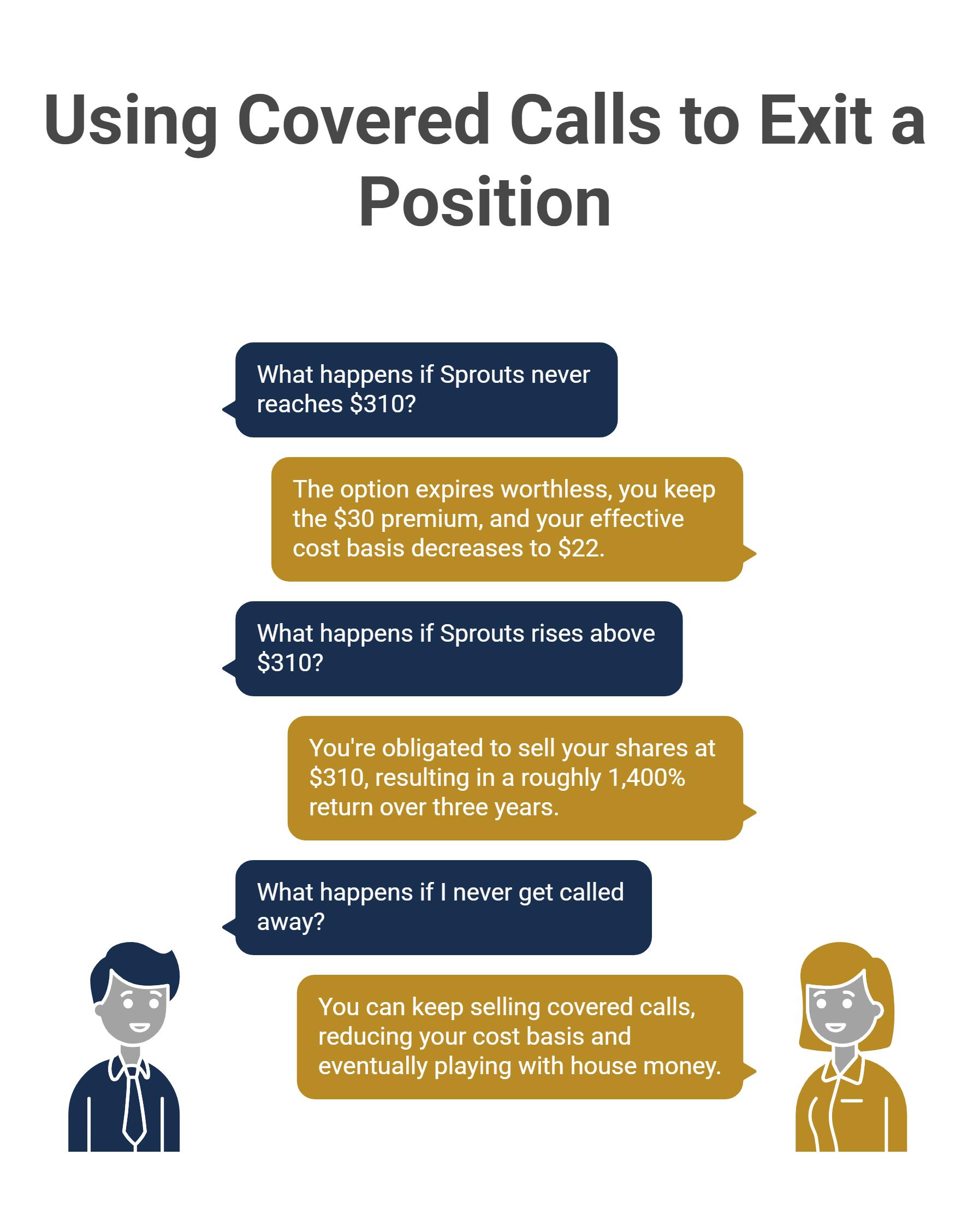
Here's the extra fun part. We can turn around and do this exact strategy to offload our shares too.
So back to our Sprouts example. We were assigned at $70 and collected $18 in premium before that. Our effective cost basis is $52 a share. Now the stock takes off over the next couple of years to $300 a share. We can dream a bit, but that could happen.
In my illustrative analysis, the intrinsic value was $140 a couple of years ago. With the business performing the way it has, let's say the new intrinsic value is $220 a share. At $300, Mr. Market has priced this well above its real value. We're happy exiting at around $310.
Now, we already have the shares. So we can sell a covered call. Remember that guy who came to your door wanting to buy your house? That's us now. Except we get to pick the price.
We sell a six-month call option with a strike price of $310. We're saying: I'm happy to sell my Sprouts shares at $310 anytime in the next six months. Because Sprouts is now trading well above intrinsic value and there's still volatility in the market, let's say we're able to collect $30 a share in premium for that contract.
Again, two outcomes. And again, both work in our favor.
Outcome One — Sprouts Never Reaches $310
The option expires worthless. We keep the $30. We still own the shares. And that $30 lowers our effective cost basis from $52 down to $22. We can reassess and potentially sell another call.
Outcome Two — Sprouts Rises Above $310
Sprouts rises above $310 and we get called away. We're obligated to sell our shares at $310. So there they go.
Now let's look at the math. We bought in at an effective $52 a share after the put assignment and accumulated premiums. We collected $30 more selling the covered call. We sell the shares at $310.
In this illustrative example, that works out to roughly a 1,400% return over about three years.
Now compare that to simply buying at $70 and selling at $300. That's over a 400% return in the same time frame. So in this example, using the options strategy the Rule One way added roughly an additional 1,000%.
The House Money Scenario
Now think about this. Imagine we never get called away from our position at all.
If that's the case, we just turn around and sell those calls again, shaving another $20 to $30 off our cost basis each time. We keep doing it. And suddenly we have none of our original money left in this stock position at all.
We're now playing with house money.
If the stock isn't rising, we can just keep doing this again and again and again, making money on our money. And that is the definition of compounding. That's the magic of this strategy.
Why Warren Buffett Was One of the Biggest Options Traders in the World
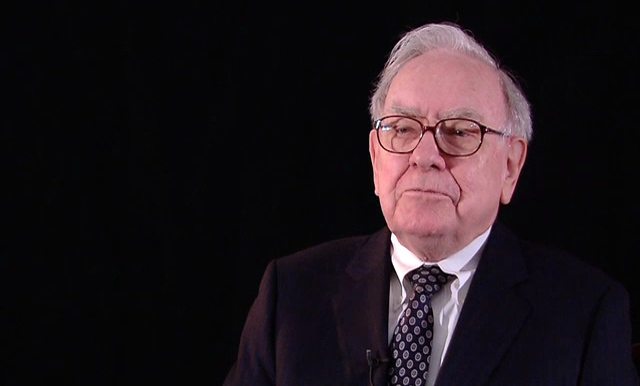
Here's something most people don't know. Warren Buffett was one of the biggest options traders in the world. Not as a speculator. As a disciplined value investor selling puts on wonderful businesses at prices he had already determined were attractive, collecting premium while he waited.
The philosophical alignment with Rule One is exact. He only sold puts on businesses he was genuinely happy to own at the strike price. When assigned, he owned something wonderful at a price that made sense. When not assigned, he earned income on committed capital.
That's a shift in thinking I learned from studying how Warren Buffett actually invests. And it's why I do these kinds of trades every single week. My whole faculty does too.
This is not a fringe strategy. It is what the most disciplined value investors in the world actually do.
Want to Go Deeper? This Is Exactly What We Cover at the Workshop
When it comes to options, this is really just the start.
Everything I've covered here, the cash-secured put, the covered call, the Sprouts example, we go through all of it in detail at our 3-day online investing workshop. And then we go even further. When you see what else we can do with options, it'll definitely blow your mind.
We've taught this workshop to over 25,000 people and we consistently get amazing feedback. If you'd like to join me and the Rule One team of coaches entirely online for 3 days of learning, just sign up for the next workshop.
It'll cost you less than a new pair of sneakers. And we don't sell anything there. It's all training.
I'd love to see you there.

About Phil Town
Phil Town is an investment advisor, hedge fund manager, 3x NY Times Best-Selling Author, ex-Grand Canyon river guide, and former Lieutenant in the US Army Special Forces.
He and his wife, Melissa, share a passion for horses, polo, and eventing. Phil's goal is to help you learn how to invest and achieve financial independence.
Get Phil's Free Guide