










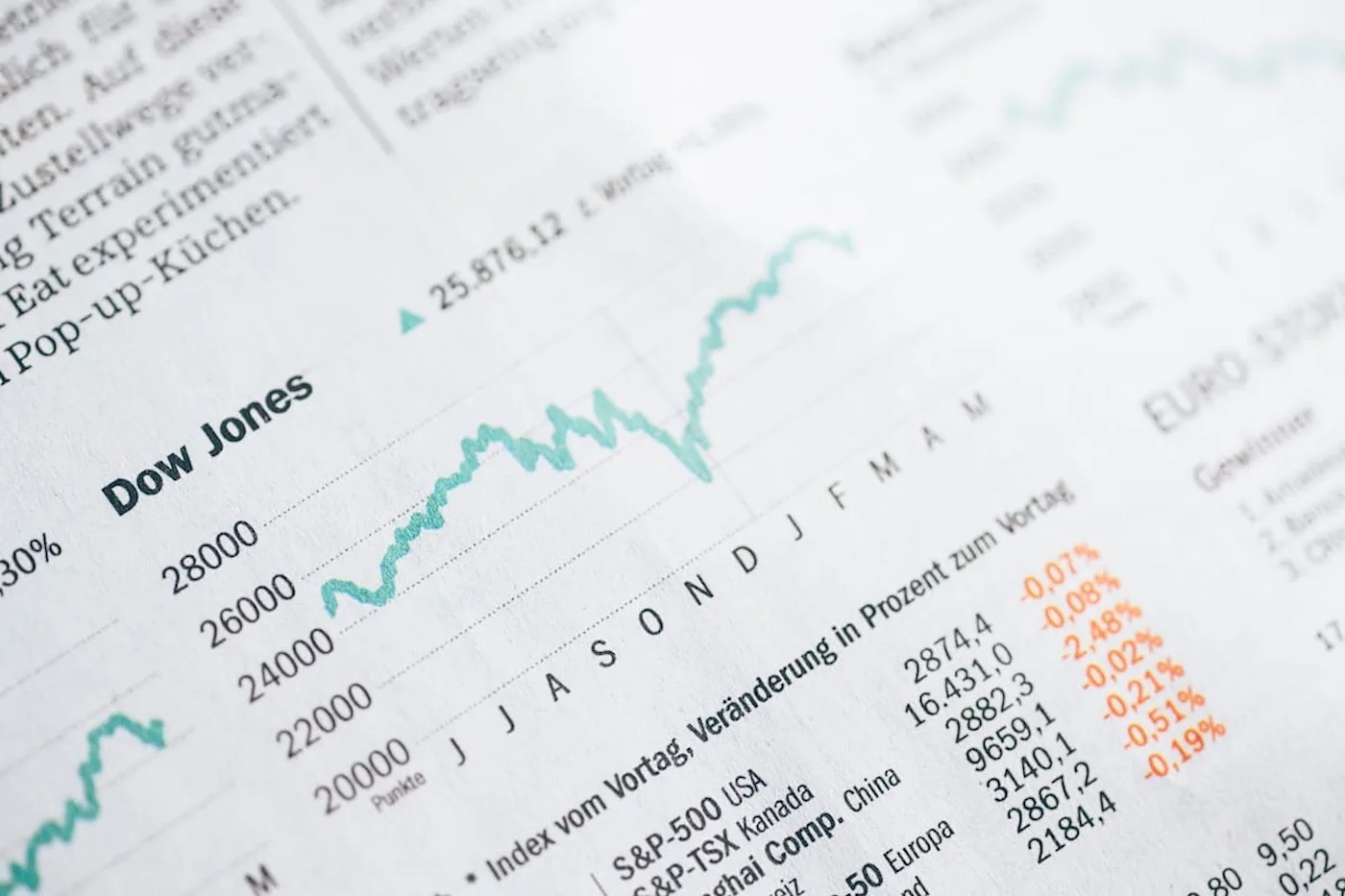
Cover Image for What Makes Stocks Go Up and Down (And How to Use It to Your Advantage)

What Makes Stocks Go Up and Down (And How to Use It to Your Advantage)

Phil Town
Phil Town

If you have ever watched the market drop and felt that familiar knot in your stomach, you are not alone. Every investor has been there, including me, who went from earning $4,000 a year as a Grand Canyon river guide to making his first million in five years after learning to understand exactly what stock prices are actually telling you.

Here is what most people never get taught: what makes stocks go up and down has very little to do with whether a business is truly good or bad. Stock prices and business value are two completely different things, and the gap between them is not something to fear. Once you understand what actually moves prices, the swings stop feeling like a threat and start looking like an opportunity.

In this guide, we will cover the key forces that move stock prices, introduce you to the most important concept in understanding market behavior, and show you how Rule 1 investors use that knowledge to act with confidence instead of fear.

How to Pick Rule #1 Stocks

5 simple steps to find, evaluate, and invest in wonderful companies.


First, Understand How Stock Prices Actually Work

At the most basic level, stock prices are set by supply and demand:

  • More buyers than sellers = price goes up

  • More sellers than buyers = price goes down

That part is straightforward. But supply and demand are themselves driven by something deeper: perception, expectation, and emotion. Investors are not just responding to facts. They are responding to what they feel those facts mean for the future. And feelings, as you have probably noticed, are not always rational.

This brings us to the most important distinction on this page, one that most investors never fully grasp:

Price is what the market feels a business is worth right now. Value is what the business is actually worth. These are not the same number.

The price of a stock reflects the market's collective mood at this moment, with all of its optimism, panic, and everything in between. The value of a business is grounded in its fundamentals, its competitive strength, and its future earning power.

At Rule 1, we teach that you are not buying a ticker symbol. You are buying a piece of a real business. The price tag changes every day. The business itself does not. And once you internalize that distinction, everything about how the market moves starts to make a different kind of sense.

Want to go deeper on how stock prices are set? Read our full guide: How Stock Prices Are Determined.


What Causes Stock Prices to Change: The Key Forces at Work

Stock prices do not move randomly. They respond to real forces; some structural, some economic, some completely outside any company's control. Understanding these forces does not mean you can predict the market. It means you stop being surprised by it.

Here are the four primary drivers of stock price movement.

Company Earnings and Business Performance

Earnings reports are one of the most direct triggers for short-term price movement:

  • Beat expectations = price typically rises

  • Miss expectations = price typically falls

  • Guidance disappoints = price can fall even when earnings are strong

But here is the Rule 1 lens that changes how you read this: a great business with one disappointing quarter is not a failing business. It may simply be a mispriced one.

Wall Street reacts to quarterly results. Rule 1 investors evaluate businesses over years. The tool we use for that longer view is the Big Five Numbers which are five financial indicators that reveal whether a business's competitive strength is real and durable:

  1. Return on Invested Capital (ROIC)

  2. Sales Growth Rate

  3. Earnings Per Share (EPS) Growth Rate

  4. Equity (Book Value) Growth Rate

  5. Free Cash Flow Growth Rate

All five should be growing at 10% or more per year, averaged over the last 10 years. A business that passes this test is not destroyed by one bad quarter. A business that fails it was never as strong as the stock price suggested. We will come back to the Big Five in more detail later in this guide.

Interest Rates and the Economy

Macro conditions shape the environment every business operates in. The key forces here include:

  • Rising interest rates increase borrowing costs for companies, compress profit margins, and make bonds comparatively more attractive, pulling investment capital away from stocks

  • Inflation erodes purchasing power and squeezes profit margins, particularly for businesses without pricing power

  • GDP growth, unemployment, and consumer confidence all feed the broader sentiment that drives market-wide moves up or down

The Rule 1 lens: these forces affect every business, but they do not affect every business equally. Companies with strong competitive moats and genuine pricing power tend to weather economic cycles far better than average businesses. A great company does not become a bad company because interest rates went up. It may simply go on sale.

Learn more about how competitive moats work: How to Invest: Competitive Moat.

External Events and Market Shocks

Some of the sharpest price drops in history have had nothing to do with any specific company's performance. They were triggered by events no one predicted:

  • Geopolitical conflicts and wars

  • Pandemics and global health crises

  • Natural disasters

  • Policy changes and trade disputes

  • Sudden regulatory shifts

What these events share is uncertainty and uncertainty makes markets move fast and often irrationally. Prices drop not because businesses have changed, but because fear has. For the prepared Rule 1 investor, this is a critical distinction. Historically, some of the best buying opportunities have followed the sharpest event-driven drops.

Read more: Events That Cause Stock Prices to Go on Sale.

Institutional Investors and Market Mechanics

Individual investors are not the only ones moving prices. Large institutional players such as mutual funds, hedge funds, pension funds manage enormous amounts of capital, and their buying and selling decisions can swing prices significantly, regardless of what the underlying business is actually doing.

When institutions sell in large quantities:

  • Prices can drop sharply even in fundamentally sound companies

  • Smaller investors often panic and follow

  • The business itself has not changed, but its price tag has

For the individual investor who is not forced to sell, institutional-driven selloffs can create meaningful discounts in wonderful companies. The price drops. The value does not.

All four of these forces are real, and all four are worth understanding. But here is what they have in common: every single one of them is filtered, amplified, or distorted by one final driver that most investors never fully account for in themselves.

It is the most powerful force in the market. And it has a name.

Meet Mr. Market.


The Most Powerful Force in the Market? Human Emotion. Meet Mr. Market.

We have covered earnings, interest rates, external events, and institutional activity. All of those forces are real, and all of them matter. But every one of them is filtered through something that most investors never fully account for: human emotion.

This is where we introduce one of the most useful ideas in all of investing. It comes from Benjamin Graham, the father of value investing and the mentor who shaped Warren Buffett's entire approach to the market. Graham did not describe the market as a system or a machine. He described it as a person. He called that person Mr. Market.

Phil Town has been teaching this concept to students for decades, because nothing else explains investor behavior quite this clearly.

So Who Is Mr. Market?

Think of it this way. You own a share in a private business. Every single day, your partner Mr. Market shows up with an offer. Some days he wants to buy your share of the business. Other days he wants to sell you more of his. There is no obligation either way. You can accept the deal, or you can simply say no and come back tomorrow.

Here is the thing, though. Mr. Market is not the most emotionally stable partner.

Most days, he is perfectly reasonable. He prices businesses close to what they are actually worth, and everything ticks along quietly.

But some days, Mr. Market is absolutely convinced the future is going to be wonderful. He is enthusiastic, he is optimistic, and he prices businesses at levels that have very little to do with what those businesses actually earn or own. On those days, he will pay almost anything.

Other days, Mr. Market is convinced the world is falling apart. He wants out of everything. He starts pricing wonderful businesses as if they will never recover, never grow, never earn another dollar. On those days, he will accept almost nothing.

What makes this particularly interesting is that Mr. Market does not notice either extreme. He has been this way his whole investing life. He genuinely believes both prices are fair.

The Pattern Most Investors Fall Into

Here is what we see happen with most investors, and it is worth being honest about because most of us have done this at some point.

When Mr. Market is feeling great, investors buy in. His enthusiasm feels like confirmation. When Mr. Market is panicking, investors sell. His fear feels like a warning. The result is a pattern of buying high and selling low, not because investors are making bad decisions on purpose, but because they have no independent anchor for what a business is actually worth.

Without that anchor, Mr. Market's price becomes the only reference point. And when his moods swing, so does every decision.

This is how investor emotion becomes the most powerful force in the short-term market. It does not just influence prices. Through herd behavior, it amplifies every other factor we covered in the previous section. A piece of economic news that might cause a 2% move under normal conditions can cause a 20% move when fear is already running high.

What We Do Instead

As Benjamin Graham observed, in the short run the market acts like a voting machine, responding to mood and momentum. In the long run, it acts like a weighing machine, pricing businesses closer to what they are actually worth.

Rule 1 investors build their entire approach around that gap.

The goal is not to predict Mr. Market's moods. That is neither possible nor necessary. The goal is to understand what wonderful businesses are actually worth before the mood swings happen. That way, when Mr. Market shows up at the door in a panic and offers a business we have studied at a fraction of its real value, we are not reacting.

We are ready. And we are shopping.


Volatility Is Not the Enemy. Not Knowing What You Own Is.

Most investors are taught that market volatility is something to manage, reduce, or avoid. It is why so many people end up in index funds, or hand their money to advisors who charge fees to navigate it for them. The message they have absorbed, often without realizing it, is that price swings equal danger.

We teach something different.

Volatility and risk are not the same thing. Volatility is price movement. Risk is the permanent loss of capital. Those are two very different problems, and confusing them is one of the most costly mistakes an investor can make.

Here is the distinction that changes everything:

  • If you know what a wonderful business is worth, a price drop is not a loss. It is a discount. Mr. Market is having a bad day, and he is offering you something valuable for less than it is actually worth.

  • If you do not know what a business is worth, any price movement feels like a threat. You have no anchor. Every dip looks like danger, and every headline becomes a reason to panic.

The solution is not to avoid volatility. The solution is to do your homework before the volatility arrives. When you understand the business you own, a falling price becomes a signal worth paying attention to, not a reason to run.

This is what Rule 1 means in practice. "Don't lose money" is not about avoiding price swings. It is about never buying a business you do not understand, and never paying more than it is worth. When you get that right, volatility stops being the enemy. It becomes the mechanism that puts wonderful businesses on sale.

We have watched this play out across multiple market cycles. The investors who come out ahead are rarely the ones who saw the drop coming. They are the ones who knew what they owned and were ready to act when the price fell.

When others are fearful, Rule 1 investors go shopping.

Want to go deeper? Read How to Deal With a Stock Market Drop and Stock Market Fear for more on building that mindset.


So How Do Rule 1 Investors Know If a Price Drop Is a Danger or an Opportunity?

When Mr. Market gets emotional and prices start moving, most investors ask one question: "Should I be worried?"

Rule 1 investors ask a different one: "Is this a wonderful business and is it now on sale?"

Those are very different questions. The first leads to panic or paralysis. The second leads to a decision. And making that second question answerable is exactly what the Rule 1 framework is designed to do.

Here is how it works, step by step.

Step 1: Evaluate the Business Using the Four M's

Before we ever look at price, we need to know whether we are dealing with a wonderful business in the first place. That is what the Four M's are for. They are our quality filter. Four questions that help us determine whether a business is worth owning at all.

  • Meaning: Do you understand this business well enough to own it? Is it one you would be proud to own?

  • Moat: Does it have a durable competitive advantage that protects it from competitors over time?

  • Management: Are the leaders honest, owner-oriented, and focused on long-term value?

  • Margin of Safety: Is the current price significantly below what the business is actually worth?

A business that passes the first three M's earns a spot on our watchlist. The fourth M tells us when to act.

Step 2: Confirm the Numbers With the Big 5

Identifying a moat through the first three M's is a strong start, but we confirm it with numbers. The Big 5 are five financial indicators that show whether a business's competitive strength is real and consistent over time:

  1. Return on Invested Capital (ROIC)

  2. Sales Growth Rate

  3. Earnings Per Share (EPS) Growth Rate

  4. Equity (Book Value) Growth Rate

  5. Free Cash Flow Growth Rate

We look at all five over a 10-year period. A wonderful business with a genuine moat will show consistent growth across all five. A business that looks good on the surface but fails the Big 5 test is one to avoid, regardless of how appealing the story sounds.

Step 3: Calculate the Sticker Price and Margin of Safety

Once we know the business is wonderful, we figure out what it is actually worth. That calculated value is what we call the Sticker Price.

We never pay Sticker Price. We wait to buy at a significant discount to it, which we call the Margin of Safety. In practice, that means buying at roughly 50% off the Sticker Price, giving us a cushion in case our analysis is slightly off, while also positioning us for a strong return when Mr. Market eventually prices the business closer to its real value.

The Rule 1 Buy Signal

When all three steps align, the business passes the Four M's, the Big 5 Numbers confirm its fundamentals, and Mr. Market has priced it below the Margin of Safety, that is when Rule 1 investors act. Not out of reaction. Out of preparation.

We also apply the 10-10 Rule before committing: we only invest in businesses we would be comfortable holding for 10 years, and that we believe will still be relevant in 10 years. If a business does not pass that test, no price is low enough to make it worth buying.

This is a learnable process. It is not intuition, not prediction, and not luck. It is a repeatable framework that Phil Town has taught to students around the world for decades.

How to Pick Rule #1 Stocks

5 simple steps to find, evaluate, and invest in wonderful companies.

If you want to start identifying wonderful businesses before Mr. Market puts them on sale, this is where to begin. The process is teachable, and we have broken it down into a clear starting point.


When Others Are Fearful, Rule 1 Investors Go Shopping

Let's bring this full circle.

Throughout this guide, we have covered the forces that move stock prices:

  • Earnings surprises and business performance

  • Rising interest rates and economic shifts

  • Geopolitical events and market shocks

  • Herd behavior and Mr. Market's mood swings

All of it is real. All of it moves prices. But here is what every one of those forces has in common: they affect price in the short term while leaving the underlying value of a wonderful business largely unchanged.

That disconnection is not a problem to worry about. It is the whole point.

The Rule 1 Investor's Edge Is Not Prediction. It Is Preparation.

Every time Mr. Market prices a wonderful business below its real value, an opportunity opens up, not for speculators trying to time the market, but for prepared investors who already know what that business is worth.

When the next market drop comes, the prepared Rule 1 investor is not scrambling. They have already done the work:

  • A watchlist of wonderful businesses that pass the Four M's

  • Sticker Prices calculated for each one

  • A clear Margin of Safety price that signals when to act

  • The confidence to move when everyone else is running

This is not about being contrarian for its own sake. It is about doing the homework before the panic hits, so that fear never becomes the thing driving your decisions.

The investors who come out ahead through market downturns are rarely the ones who saw them coming. They are the ones who were already prepared.

Your Next Step

If you want to be ready for the next market drop, not just to get through it, but to use it, the Market Crash Guide is the right place to start.

Market Crash Guide

Want to understand more about how the market works? Start here: How the Stock Market Works.


Frequently Asked Questions About What Makes Stocks Go Up and Down

What is the most common reason stocks go up or down?

Short-term price movements are most commonly driven by investor sentiment, for example how people feel about a company or the broader market at a given moment. Earnings reports, economic news, and external events all feed that sentiment. Over the long run, however, stock prices tend to reflect the actual underlying value of the business.

Is a falling stock price always a bad sign?

Not necessarily, and this is one of the most important distinctions in investing. A falling price can reflect a deteriorating business, or it can reflect an overreacting market temporarily discounting a wonderful company. The key is knowing the difference, which requires understanding the business behind the stock, not just the number on the screen.

How do interest rates affect stock prices?

When interest rates rise, borrowing becomes more expensive for companies, which can reduce profits and compress stock valuations. Higher rates also make bonds relatively more attractive, pulling investment capital away from equities. Companies with strong competitive moats and pricing power tend to be more resilient through rate cycles than average businesses.

What does "stock market volatility" actually mean?

Volatility refers to the frequency and magnitude of price swings in the market or in an individual stock. High volatility means prices are moving sharply and rapidly, often in response to news, earnings, or shifts in investor sentiment. At Rule 1, we view volatility not as something to fear but as the mechanism that regularly puts great businesses on sale.

What is Mr. Market, and why does it matter to investors?

Mr. Market is a concept introduced by Benjamin Graham and a cornerstone of Phil Town's Rule 1 teaching. He represents the collective emotional behavior of the market; rational some days, wildly irrational others. Understanding Mr. Market helps investors separate price from value, and recognize when emotional overreaction creates genuine buying opportunities in wonderful businesses.

What causes stock prices to go up over the long term?

Over the long term, stock prices rise when the underlying business grows its earnings, revenue, and competitive strength. Short-term prices are driven by sentiment and perception, but the market eventually prices businesses closer to what they are actually worth. This is why Rule 1 focuses on business quality and valuation rather than short-term price prediction.

Can everyday investors really learn to read stock price movements?

Yes and this is exactly what Rule 1 Investing teaches. You do not need to predict every market move. You need to understand what makes a business wonderful, learn how to calculate its real value, and be ready to act when the market prices it below that value. That is a learnable skill, not a talent reserved for Wall Street professionals.

The market will always move. Mr. Market will always have his moods.

That is never going to change. What changes for Rule 1 investors is not the market; it is their preparation. When you know what wonderful businesses are worth, volatility stops being something that happens to you and starts being something you can use.

The Market Crash Guide is where that preparation begins.

Market Crash Guide

Ready to go deeper? Join us at the Virtual Investing Workshop and learn how to find, evaluate, and value wonderful businesses using the complete Rule 1 framework live, with real coaching.

Virtual Investing Workshop