

Nothing in life is ever a straight line, right? We all experience ups and downs. Financially, emotionally, and, yes, even in our investments. If there’s one thing I’ve learned, it’s that these cycles are both normal AND valuable. These cycles of change exist everywhere. Most especially when we take a closer look at economic trends and the stock market's history. Every twist and turn teaches us something we can carry forward, especially when it comes to our money.
Now, I get it. “Investing involves risk” is something we hear all the time, and it can be intimidating. But if you know how to invest your money wisely, every risk you take can bring an equally rewarding opportunity. The hardest part? Making that first move.
Let’s dive in and build an investing plan you can feel good about.
The Four M's For Successful Investing
How to invest with certainty in the right business at the right price
What are Low-Risk Investments?
Let’s clear up a common misconception.
Low-risk investments aren’t just for the ultra-cautious. They’re for anyone who wants steady interest income, minimal risk of losing money, and a solid foundation for their portfolio. For many conservative investors and risk-averse investors, these investments are the backbone of their financial plan.
Low-risk investments are assets that have a low chance of losing value. Sure, their growth isn’t as rapid as some high-risk options. But their predictability and stability can be a lifesaver, especially during market stress or when market risk is high.
According to the MSCI Wealth Trends 2026 survey, roughly 86% of advisers report heightened client concern around global uncertainty. This prompts many investors to rethink risk and lean into diversification. As persistent geopolitical volatility continues to shape markets in 2026, low-risk assets are increasingly viewed as portfolio “eye-candy”. Many of these individuals are focused on capital preservation. Minimizing interest rate risk as rising interest rates continue to impact the market.
If you’re new to investing or just a bit risk-averse, starting with low-risk investments is a great way to get your feet wet. You’ll gain experience, grow your wealth, and learn how to navigate the market.
Smart Investing: What to Consider Before Choosing Low-Risk Options
I understand, investing can seem complicated and risky. But the good news is: if you stick to a few basic rules, it’s not as tough as it seems. At Rule #1, we always look at the “margin of safety”. That extra cushion helps protect you from market swings. Maybe even unexpected changes in net asset value.

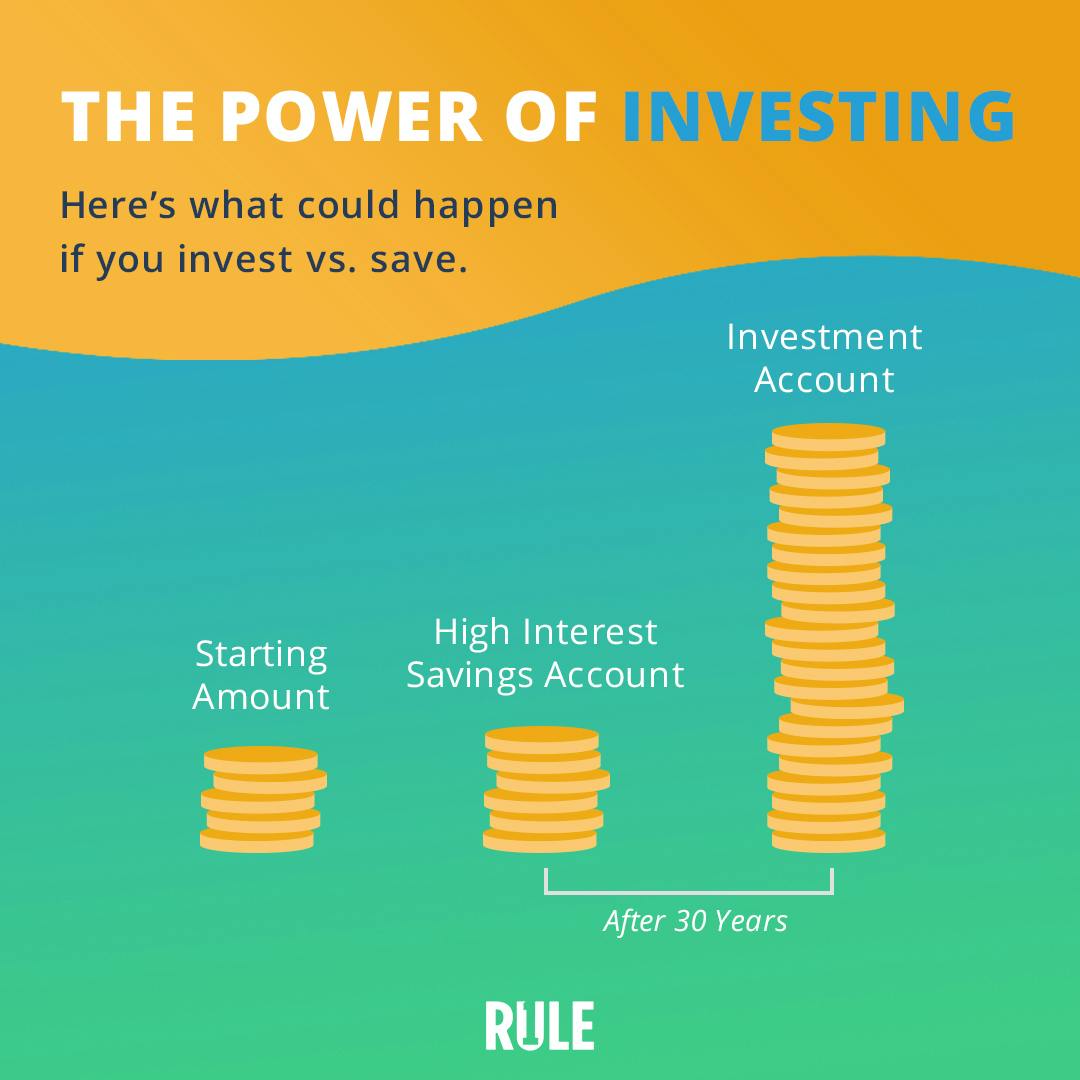
Here are a few things to consider before choosing your low-risk options:
Know your risk tolerance: How much risk are you comfortable with? Be honest with yourself.
Define your investment objectives: Are you saving for retirement, an emergency fund, or just looking for a steady income?
Understand your timeline: If you’ll need the money in the next 3-5 years, low-risk investments are your best friend.
Do your homework: Knowledge is power. Once you learn the basic framework for how to invest like the best in the business, the better your results.
Think of low-risk investments as the “bedrock” of your portfolio. They provide stability, so you can take more strategic risks elsewhere if you want.
Five Common Investing Strategies (And Where Low-Risk Fits In)
You've now chosen how risky you’d like to be with your investments. The clear next step involves learning how to pick the right investing strategy for you. The five most common types of investing strategies include:
Income Investing
An income investing strategy focuses on buying securities that pay dividends. Think dividend-paying stocks, mutual funds based on dividend-paying stocks, or bond funds that produce steady interest income. This approach is especially appealing to those who value capital preservation and want to avoid excessive market risk.
Impact Investing
With impact investing, investors choose to consciously buy companies that are committed to positive social or environmental change. Financially stable companies with strong ethical practices can also offer lower credit risk.
If you're hoping to see financial returns and give back to society by investing in worthwhile causes that you are passionate about, impact investing could be the avenue for you.
Growth Investing
Growth investing is centered around investing in companies that you know are valuable in order to exploit their future growth.
It is important to keep in mind that growth investing can be very bad for your investment portfolio if you are buying into these companies at today's valuations.
Small-Cap Investing
Small-cap investing is very similar to growth investing since it is also concerned with a company's potential for massive growth.
The only difference with small-cap stock funds can be seen in the age of the company. Typically, investors will buy into younger, riskier companies with the hope that they'll one day grow to the size and success levels of large companies like the “Googles” and “Facebooks” of the world.
The Value Investing Cheat Sheet
Learn what 10 steps you should take to make smarter investing decisions
Value Investing
Last but not least, value investing is all about waiting to get the best price for the companies you'd like to invest in. It is all about buying companies when they go on sale and are listed at a price that is far below their true value.
Value investors buy companies that they know will produce cash flow in the long run when they are on sale for a discounted price. This makes value investing one of the best low-risk investments due to its ability to generate high returns without needing to spend much upfront.
When you buy a wonderful business at a great price, you're actually reducing your risk, not increasing it. That's why Rule #1 isn't about avoiding risk entirely. It's about understanding it deeply and using it to your advantage.
Types of Low-Risk Investments
In addition, building a smart investment strategy is just as important as picking a process for your strategy. When I mention smart investments, I am referring to investments in:
Gold
Gold has tangible value, which is why many people gravitate toward it in times of fear and uncertainty. The price of gold rises and falls, depending on the demand. Some investors use gold as a hedge against inflation risk and market volatility.
Real Estate
Investing in real estate can be a great investment since in many cases, its value increases over time. For instance, National Association of REALTORS® sees a 14% nationwide increase with home sales for 2026.
However, there are some downsides. First of all, you need to have a significant amount of disposable income that you can use to successfully invest in a real estate property. Plus, if you decide to take on the responsibilities of a landlord, you'll be responsible for repairing any damages to your real estate property.
401K
Setting aside money that you can use once you've left the workforce is one of the best personal investments you can make. That being said, the way you decide to invest in your retirement can determine how much value you'll get out of your retirement plan in the future.
For example, there are times when opening a 401k is considered a smart investment and times when there could be better options available to you.
If your employer offers to match a percentage of your investment, for instance, this is a smart investment because you're basically receiving free money.
Stocks
Stocks can be an incredibly smart investment if you do your research on the best stocks to buy. When you buy stocks, you benefit in two ways. First, from any increase in the price of shares of the stock. Second, from dividends that the company pays to its investors.
If a company continues to grow, your investment will grow as a result. It's really a no-brainer.
Plus, it's one of the best low-risk investments you can try.
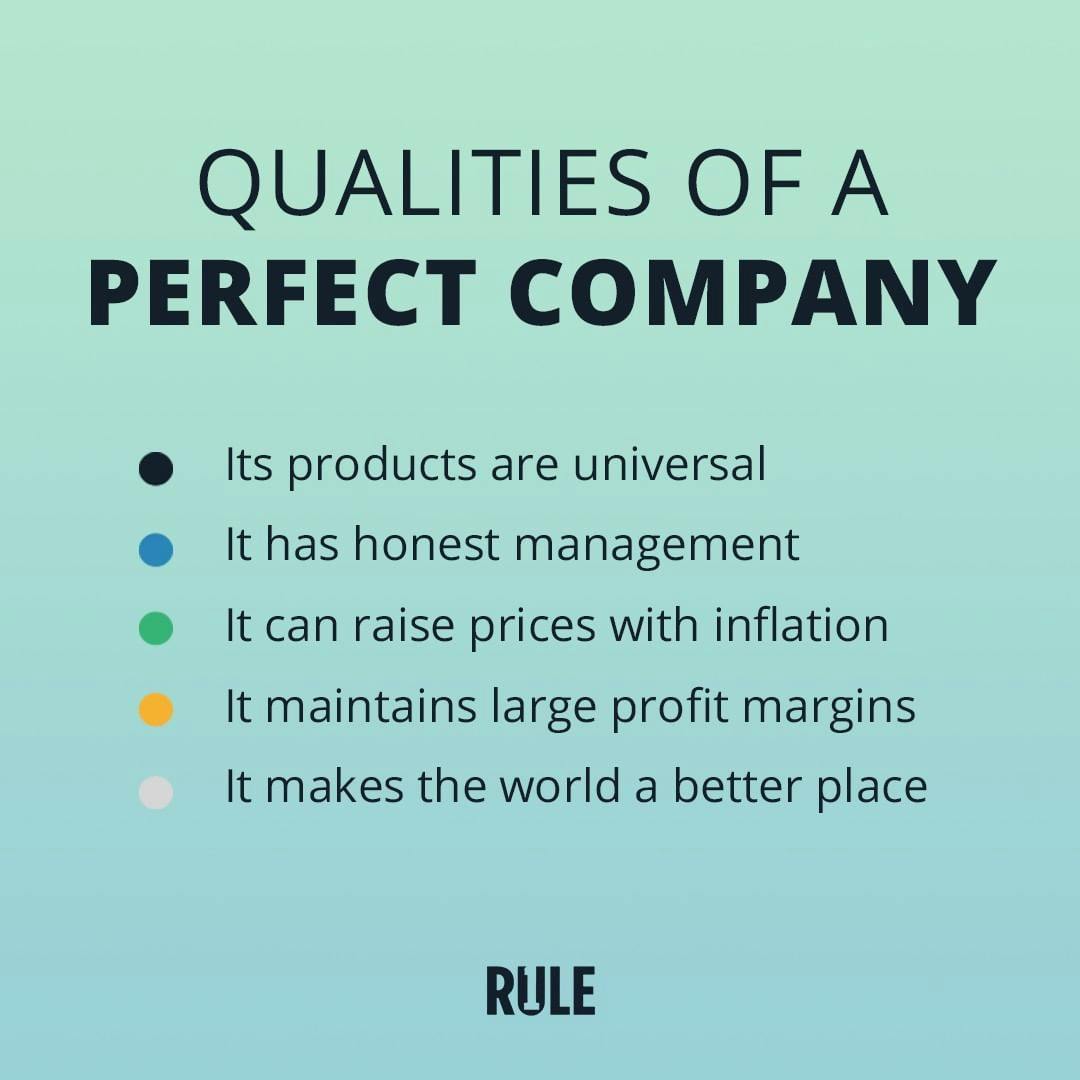
The key to minimizing risks and maximizing returns with stocks lies in what we call the margin of safety. This refers to the process of buying companies on sale when their shares are selling at half the price of the company's value. That sounds like a great deal, right?
If you learn how to invest in stocks this way, then it is the smartest investment you can make.
Do your research and stick to the Four M's of investing when choosing new companies to add to your portfolio. You'll be well on your way to reducing risk exposure and exceeding your fiscal goals.
The Four M's For Successful Investing
How to invest with certainty in the right business at the right price
U.S. Savings Bonds
Backed by the government agency, U.S. Savings Bonds (Series I and Series EE) are about as safe as it gets. Series I bonds even adjust for inflation, so your purchasing power is protected. These are a great choice if you’re worried about losing money to inflation or market volatility.
Certificates of Deposit
CDs don't see a lot of action, and this is what makes them one of the best low-risk investments.
A Certificate of Deposit (CD) lets you lock in a set interest rate for a specific amount of time, ensuring you know exactly what your return will be. CDs are often FDIC insured, so your principal is protected up to $250,000 per bank.
At Rule 1, we think CDs are one of the easiest low-risk investments you can take for a test run. They don't require you to be actively involved in the investing process. As long as you have the time, they are a long-term investment. It will provide you with a healthy payout once the terms of the CD have elapsed.
Many online banks are still offering APYs over 5% for 12-month terms. It’s a simple, hands-off way to earn steady interest, with minimal risk.
High-Yield Savings Accounts
If you’re not earning interest on your savings, you’re leaving money on the table.
Money in a savings account automatically earns interest. It even gives more value in your pocket just for keeping your savings account active.
If you make just 1% interest on your savings annually, you have $100,000 in your account. Within just one year of building interest on your current savings, you'd earn an extra $1,000 in interest alone.
And, it gets even better. Compound interest builds upon itself to give you the most value for your money. As a result, the next year you would earn an additional 1% on the total from the year before (the original amount of money plus the interest that was earned the previous year).
High-yield savings accounts are federally insured, easy to access, and currently offer rates around ~4% APY. That’s a lot higher than your traditional bank account. It’s perfect for building an emergency fund or holding cash while you wait for the right investment opportunity.
This is the easiest money you'll ever make. Opening a few traditional savings accounts and high-yield savings accounts will give compound interest the power to reward you for how much you're putting away for a rainy day.
Dividend-Paying Stocks
Dividend stocks are distributions of a company's earnings to its shareholders. The rate of the distribution is determined by the board of directors. This can be in the form of cash, stock, or property. It is the money the company pays out to its shareholders in cash.
At Rule #1 Investing, we think of dividend stocks as a return on capital instead of a 2-3% return on our investment each year.
In other words, the goal is to lower our stock market investment risk each year by receiving dividend payments to reduce our basis. Our basis is directly correlated with the risk of owning that business. If your basis goes down, so does your risk.
And there you have it!
Dividend-paying stocks are one of many other low-risk investments that could be worth exploring.
Money Market Accounts
A money market fund falls within the same family of savings accounts as high-yield savings accounts. They are essentially interest-bearing accounts that you can open through your bank. Money market mutual funds maintain a conservative profile by allocating capital to highly liquid, short-term instruments. This includes government securities, corporate commercial paper, and municipal obligations. Your money market account is safe because the FDIC protects your balance up to $250,000 at each bank where you hold an account.
Money market accounts often also have some features of a standard checking account. Think debit card or a checkbook. On the other hand, high-yield savings accounts do not.
The upside to a money market account is that you may not lose much when the day-to-day fluctuations that happen in the market take place. However, with a money market account, you also may not earn as much interest on your investments, either.
Bond & Mutual Funds
Mutual funds, especially those focused on bonds or other fixed income investments, offer diversification and professional management. When comparing options, look at the track records of different fund companies. Consider how their bond funds or index funds have performed during periods when interest rates fall or rise.
However, Warren Buffett has acknowledged that most active fund managers fail to beat the market over time. For example, according to the SPIVA U.S. 2025 Q4 scorecard, over 87% of actively managed large-cap funds underperformed the S&P 500 over the past 10 years. Always review past performance, but remember it does not guarantee future results.
That's why at Rule #1, we advocate for taking control of your financial future by learning how to value and invest in wonderful businesses yourself.
The financial services industry has convinced many of us that we are not equipped with the knowledge or expertise to manage our own money. In reality, even most advisory or brokerage services can't beat the market.
The long-term performance of the industry speaks for itself. It tells us that it is far more advantageous to manage our own money than to leave it in the hands of others.
Treasury Bills, Treasury Notes, and TIPS
All of these investments are options that are provided by the U.S. Treasury. U.S. Treasuries are guaranteed by the government, making them an exceptionally safe investment because the risk of the government failing to pay its debts is nearly zero.
One of the lowest risks in this category is Treasury Inflation-Protected Securities, also known as TIPS. Treasury Inflation-Protected Securities come in two different forms.
The first interest rate is fixed, so it doesn't change for the length of the bond. Meanwhile, the second is guaranteed by the government to have built-in inflation protection.
This is beneficial since the market value of your investment will continue to grow with inflation, earning you a higher overall return. These government securities are especially valuable when interest rates rise and inflation risk increases.
Fixed & Immediate Annuities
An annuity is an insurance contract that is issued and distributed by a financial institution that plans to pay out invested funds in a fixed income stream in the future. Fixed annuities guarantee a specific interest rate or predictable income stream and are often used for retirement planning.
The way this works is that you'll invest in or purchase annuities through a series of monthly payments. Then the bank will issue a stream of payments (a lump sum of money invested) that is intended to cover your monthly income for a fixed period of time or for the remainder of your life.
Additionally, annuities can be fixed (the rate of return remains the same) or immediate (the rate of return is variable). With fixed annuities, an insurance company will typically give you a specific payment that is due in the future. Then you'll invest that money in safe vehicles, like U.S. Treasury securities or corporate bonds.
Variable annuities function a little differently. In this instance, you choose a portfolio of mutual funds, and the insurance provider will invest in that portfolio. Then you'll receive a payout (either on a fixed timeline or based on the account's movement) that is determined by taking a closer look at how well the funds perform.
The benefit of an annuity is that you receive a guaranteed income. Because of this, the risk involved will be much lower. Additionally, annuities are backed by the insurance company (or companies) that issues the annuity. Although these companies do not offer the same type of protection that federally backed investments do, they have still proven to be incredibly secure.
However, annuities do not account for changes in inflation. You'll actually be losing about 3% of the buying power of your annuity income every year. This makes it much more difficult to live comfortably and within your means once you decide to hang up your corporate coat.
Remember: Risk Comes From Not Knowing What You’re Doing
As a new investor, it’s completely normal to feel concerned about what could happen to your money. But at Rule #1, we don’t believe the solution is to “start low-risk” and eventually graduate into high-risk investments.
Real risk doesn’t come from the stock market.
It comes from not understanding what you own.
Low-risk investments may feel safe because prices don’t move much. But safety and growth are not opposites. The goal isn’t to chase bigger rewards by taking bigger risks. The goal is to reduce risk by investing in businesses you truly understand.
Instead of asking, “How much risk should I take?”
We ask, “Is this a wonderful business at an attractive price?”
That means:
Investing in companies you understand and are proud to own
Looking for durable competitive advantages (a strong Moat)
Trusting capable, owner-oriented Management
Buying only when there’s a clear Margin of Safety
When you approach investing this way, you’re not chasing thrills. You’re making disciplined, principle-based decisions designed to protect your capital first — because Rule #1 is simple: Don’t lose money.
So here’s the better question:
Will you leave your financial future to chance — or will you learn how to evaluate businesses with confidence and clarity?
Before you invest a single dollar, download our Must-Have Investing Checklist. It walks you step by step through what to look for in a wonderful business and helps you apply the Rule #1 framework the right way from the start.
Attend a Rule #1 Workshop
Learn how to conduct research, choose the right companies for you, and determine the best time to buy.
**Editor's Note (Updated 2026): This article was originally published in 2022 and has been significantly updated in 2026 to reflect current examples and Rule #1 investing insights.